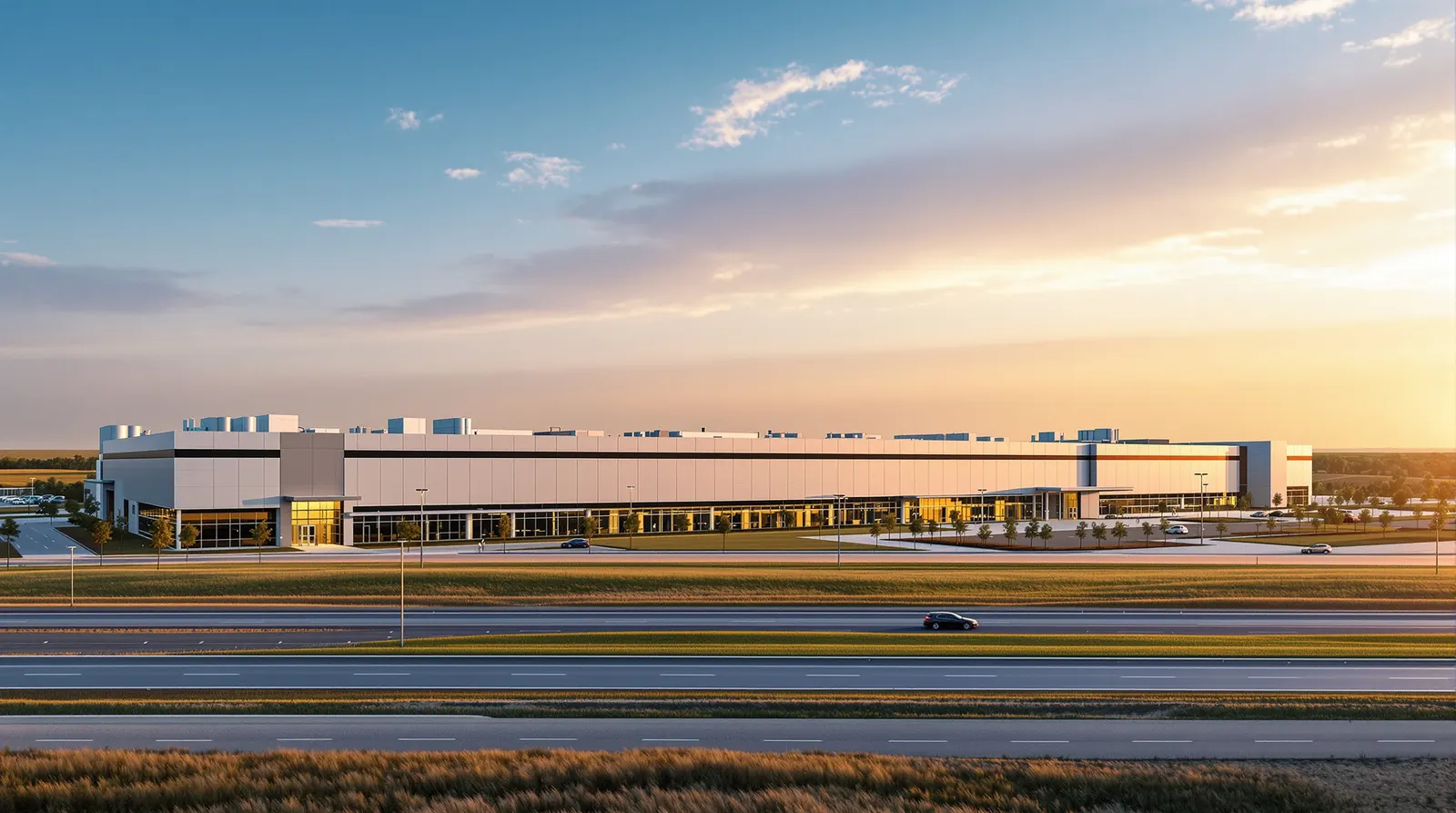
North Texas keeps getting semiconductor headlines, and the latest one has NVIDIA’s name on it. That got a lot of people asking me whether NVIDIA is building a chip plant in Sherman. The short answer is no, not the way it sounds. The longer answer is more useful, because the real estate story underneath the boom is not the one most of the headlines tell. The jobs are coming. The apartments are already here, and a lot of them are empty. The houses people actually want are somewhere else. Here is what is really happening, and where the opportunity sits.
Is NVIDIA building a plant in Sherman, Texas?
Not exactly, and the distinction matters if you are making a decision based on it. The plant belongs to Coherent Corp., not NVIDIA. Coherent is expanding its existing Sherman facility, the former Finisar campus on US-75 South, in a project it put at about $650 million when it broke ground in June 2026 (NVIDIA, June 2026; SEDCO, June 2026). NVIDIA is its anchor customer and a strategic partner of roughly two decades, not the owner or the builder.
What Coherent makes there is the reason NVIDIA is involved. The Sherman site runs the world’s first high-volume 6-inch indium phosphide line, producing the lasers and optical components that move data across the networking inside AI data centers. The expansion is set to roughly double the plant’s footprint and add more than 1,000 jobs, including over 550 direct advanced-manufacturing and engineering roles, supported by a federal CHIPS Act letter of intent for up to $50 million and earlier state and local incentives. Separately, in March 2026 the two companies announced that NVIDIA would invest about $2 billion in Coherent alongside a multiyear purchase commitment (NVIDIA, March 2026; KXII, March 2026). So when you see “NVIDIA in Sherman,” read it as “NVIDIA’s key optical supplier is doubling down in Sherman.” Same growth signal, different owner.
How big is Sherman’s semiconductor boom?
Coherent is the third anchor, not the first. Sherman now holds one of the densest concentrations of chip investment in the state, and it helps to see the three side by side.
| Company | Investment | Direct jobs | Status |
|---|---|---|---|
| Texas Instruments | Up to ~$40 billion | ~3,000 | Up to 4 fabs; first in production Dec 2025 |
| GlobalWafers (GlobiTech) | ~$5 billion | ~1,500 | Silicon-wafer plant; ramping toward ~2031 |
| Coherent | ~$650 million | 1,000+ (550+ direct) | Broke ground June 2026 |
Figures compiled August 2026 from company announcements, the Governor's office, the U.S. Commerce Department, and SEDCO, 2022 to 2026. Texas Instruments has since raised its broader U.S. investment plan above $60 billion across multiple states; the Sherman-specific figure is used here. Verify any number before relying on it.
Together that is comfortably north of $45 billion and roughly 5,500 jobs, with thousands more indirect. The part that gets lost in the headlines is the timeline. These jobs do not switch on at a ribbon-cutting. Texas Instruments phases in one fab at a time, GlobalWafers is not at full capacity until around 2031, and Coherent hires toward its total “at completion.” This is a staged, multi-year demand curve, and it explains the strange thing happening in the housing market right now.
Why are Sherman’s new apartments sitting soft?
Because the apartments were built for a workforce that has not fully arrived yet. Sherman spent years adding 200 to 300 apartment units annually, then the pipeline exploded once the chip announcements hit. Occupancy went the other way. It fell from about 97 percent before the boom to roughly 91 percent by mid-2024 (KXII, July 2024), and to about 78 percent by June 2026 after more than 2,200 units opened in two years, according to the City of Sherman’s own multifamily occupancy study (reported by CandysDirt, July 2026).
The city’s position is that this tracks the projections in its 2024 housing study, and that the jobs will absorb the units over time. That is a reasonable read. But right now it is a real lease-up gap, and it is the clearest single signal in the market: supply ran ahead of the workers. For a renter relocating for one of these jobs, that is leverage. For anyone deciding what to build next, it is a warning sign painted on the side of every half-leased building.
If apartments are soft, why are homes still hard to find in Sherman?
Because apartments and houses are not the same market, and the for-sale side has not softened the way rentals have. HUD’s profiles of the Sherman-Denison market put for-sale vacancy in the range of 1 to 2 percent across 2022 and 2023, far below a balanced market, and described a shortage of homes for sale. That is a small fraction of the roughly 22 percent of local apartments now sitting empty. Sherman’s median sale price was about $285,000 in May 2026, down about 8 percent year over year (Redfin, 2026), a cooling in price that has not come with a flood of for-sale inventory.
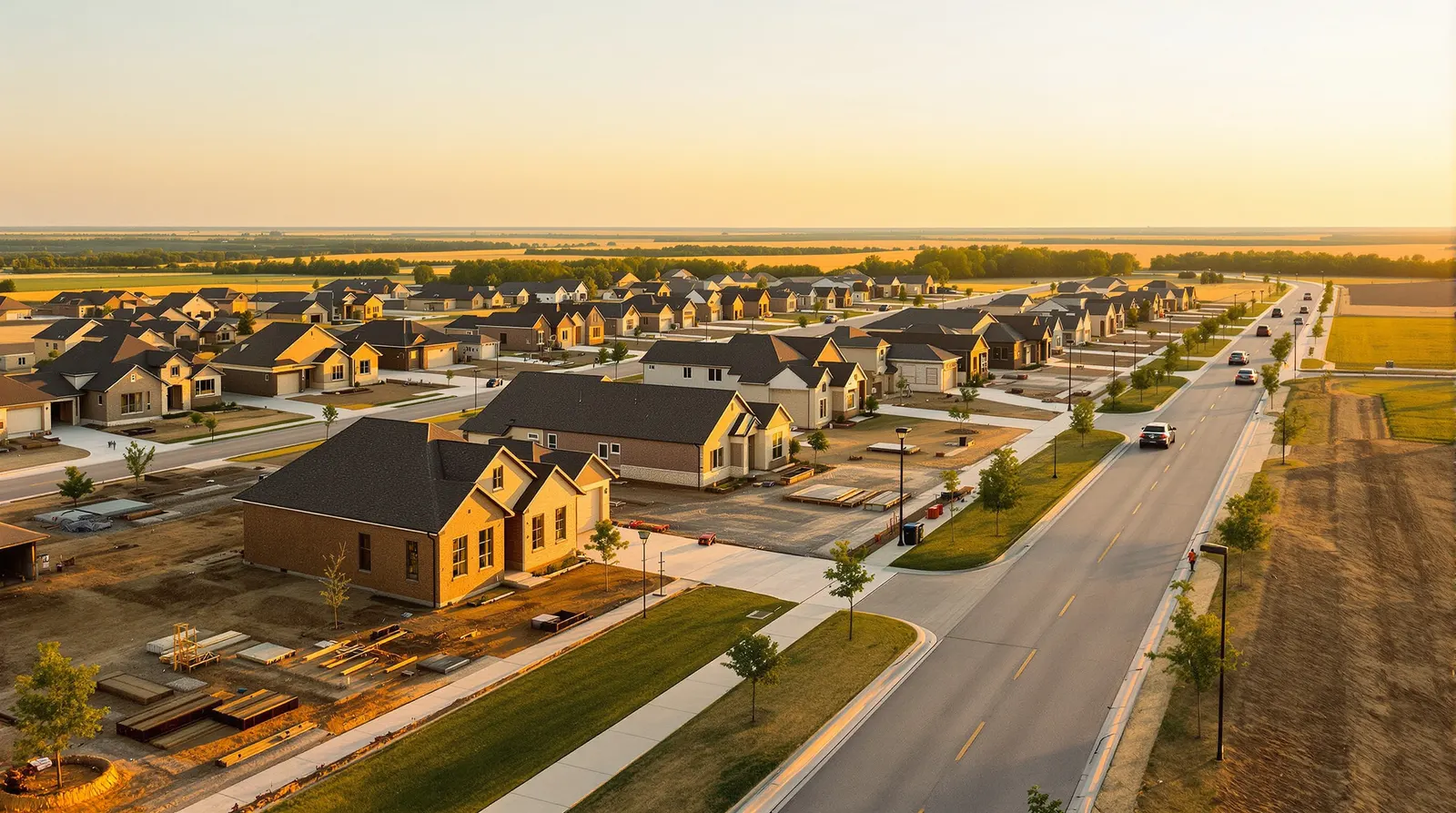
So the boom has produced a split screen: soft apartments and tight houses, at the same time, in the same town. That mismatch is the whole story, and it points straight at a question nobody in the headlines is answering. If the houses are so tight, where are all these new workers going?
Where are the Sherman fab workers actually buying homes?
A lot of them are buying south of Sherman and driving north to work. The fastest new-home growth in the area is not in Sherman proper. It is in Van Alstyne, Howe, Melissa, and Anna along the US-75 corridor, and buyers there routinely cross-shop McKinney and Celina in Collin County (D Magazine, January 2025). Van Alstyne sits about 16 to 17 miles, roughly 19 minutes, south of Sherman on US-75, so living south and working north costs a commuter almost nothing in time.
Here is the part I have not seen anyone else put a number on. Even before the fabs finished hiring, nearly half of all the jobs in Grayson County, about 47 percent as of 2022, were held by people who commute in from another county, and Collin County was the single largest source of them, roughly 4,601 workers, close to 1 in every 10 jobs in the county (U.S. Census LEHD/LODES, 2022). So the pattern I am describing, live in Collin, work in Grayson, already runs at scale, and Collin already feeds it more than anywhere else does. The drive is a short hop: Grayson County’s average commute is just 25.8 minutes (U.S. Census, 2020 to 2024).
| Where Grayson County's workers live | Workers | Share of all Grayson jobs |
|---|---|---|
| Grayson County (live and work here) | 25,036 | 52.6% |
| Collin County | 4,601 | 9.7% |
| Dallas County | 2,363 | 5.0% |
| Denton County | 1,906 | 4.0% |
| Fannin County | 1,776 | 3.7% |
| Tarrant County | 1,611 | 3.4% |
Residence county of workers employed in Grayson County, U.S. Census LEHD/LODES (OnTheMap), 2022, all primary jobs. Predates most semiconductor hiring; shown as the pre-boom baseline. Percentages are of all 47,615 Grayson County jobs.
Two things I want to be straight about. That Census data predates most of the fab hiring, so it is the baseline, not proof of what a specific TI or Coherent worker will do. And historically Grayson has actually sent more of its residents south to Collin County jobs than it pulls north, because until now Collin is where the jobs were. The boom reverses that setup. Grayson is now the one creating the jobs, roughly 5,500 of them, and the open question is where those workers choose to live. The new rooftops, especially the higher-priced ones, are answering it south of Sherman. Given the choice, a relocating engineer on a chip-plant salary buys where the newer inventory, the larger lots, and the schools they want already are.
If you are relocating for one of these jobs, the live-in-Sherman-or-buy-south question is the first real decision, and it pays to run it before you tour anything. Tell me your job site and your budget and I will map which side of the county line actually fits your commute and your money.
Why are buyers choosing Van Alstyne over Sherman?
Van Alstyne has quietly become the gateway of this whole corridor. It is one of the fastest-growing towns in North Texas, having nearly doubled since the 2020 census to roughly 8,700 people in 2026, with local officials projecting more than 30,000 by 2030 and a 667-acre, 2,000-plus home development already approved on the county line (KXII, August 2024).
The prices tell you who is moving there. Van Alstyne’s median new-construction sale price was about $547,000 in December 2025 (new-home market data), and its overall median list price runs in the high $400,000s, close to double Sherman’s median. That is the higher-end and move-up demand from the boom, and it is landing in Van Alstyne, at nearby Mantua, and up at Denison’s Preston Harbor, rather than inside Sherman. If you want the detail on that town specifically, I keep a full Van Alstyne buyer’s guide with the MUD-tax and master-planned-community traps that catch people there.
What does the Sherman boom mean for builders and developers?
It means there is a product mismatch sitting in plain sight. The corridor is over-supplied with apartments and under-supplied with for-sale single-family, particularly move-up and larger-lot homes, and the demand is concentrating south of Sherman and up-market rather than in the entry-level tract product Sherman has mostly delivered. When one housing type is barely 78 percent occupied and the other has for-sale vacancy in the low single digits, the gap is the opportunity.
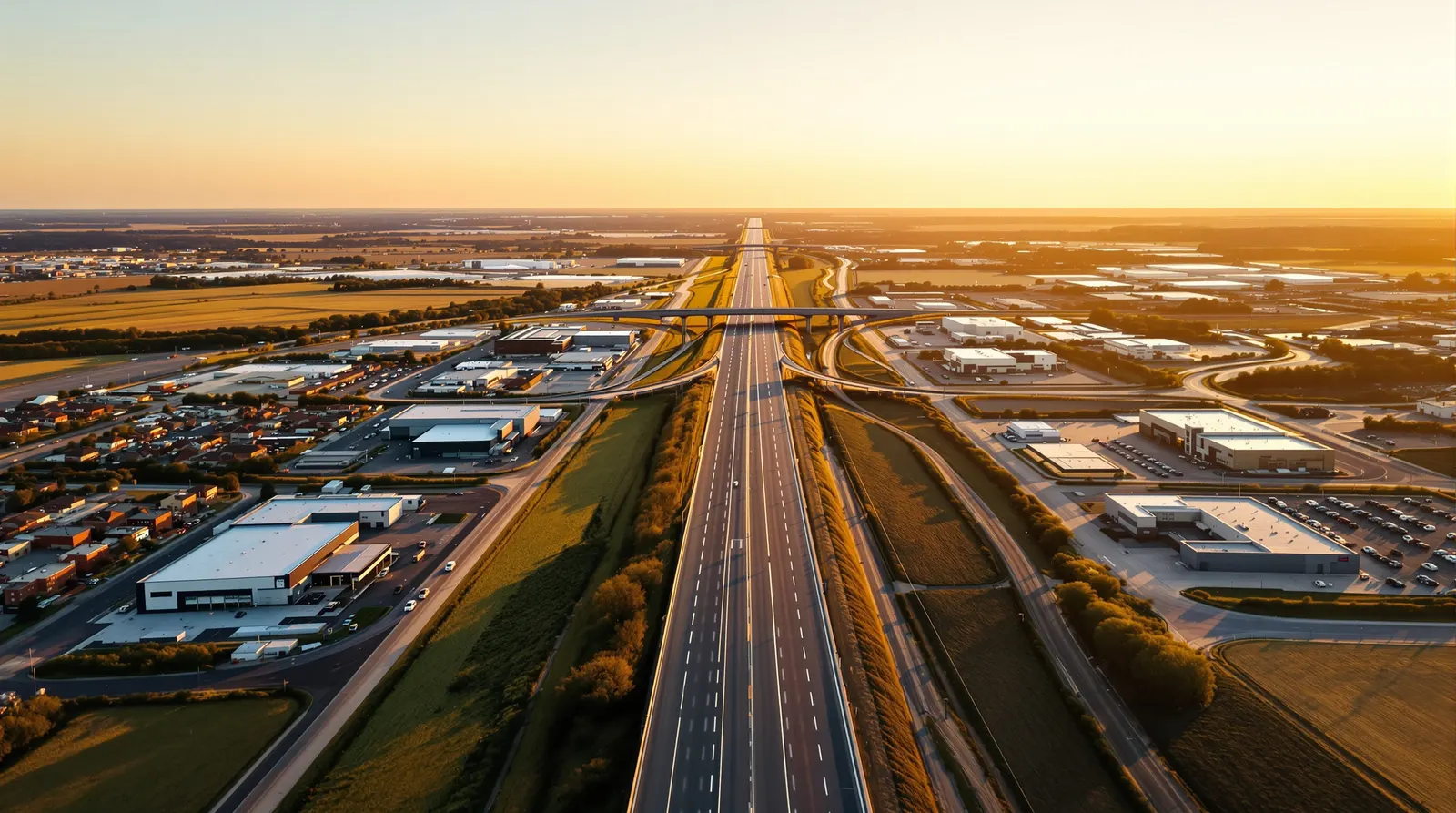
The buildable path follows that same US-75 spine, from Van Alstyne through Howe to Sherman, plus the TI-adjacent mixed-use sites now moving, like the roughly $250 million Jamestown Square directly across the highway from the Texas Instruments campus (Bisnow, May 2025). The staged job ramp through about 2031 favors for-sale absorption over apartments across the next three to five years. For a developer, that argues for move-up and larger-lot single-family on the corridor rather than more multifamily. For an investor, cooled prices plus a long, funded demand ramp is a buy-and-hold setup, not a flip. I work with both, and I will pull the Sherman investor numbers or the buildable-land rules for Grayson County for a specific parcel or price point.
Is now a good time to buy near Sherman?
For anyone with a multi-year horizon, the setup is unusual and, I think, favorable. Prices have cooled slightly at the exact moment more than $45 billion of investment and thousands of jobs are still ramping in. That is a builder-overbuild lag working itself out, not a broken market. The move is to buy ahead of the absorption, along the right stretch of the corridor, and hold while the jobs turn on in stages.
Where you buy matters as much as when. If you want to live close to the plants and take advantage of the soft rental market first, that is one plan. If you want the newer inventory and stronger resale of the southern corridor, Van Alstyne, Anna, and Melissa are where the demand is pooling, and the luxury and larger-lot end of that market is the tightest of all. If you are relocating for one of the jobs, my guide to moving to Sherman for the semiconductor boom covers the day-to-day of living up here, and the broader Sherman buyer’s guide has the neighborhoods. Tell me whether you are buying to live, to hold, or to build, and roughly your budget, and I will send you the version of this corridor that fits it.
I am a REALTOR® with REAL Broker, LLC, not an appraiser, a market economist, or an economic-development official. Investment totals, job counts, occupancy rates, prices, and commute patterns here are illustrative, drawn from the dated public sources named above, and change quickly. This is not investment, tax, or relocation advice; confirm current figures with the companies, the City of Sherman, the county appraisal district, and your own professionals before you rely on them. Current as of August 2026.