North Texas waterfront · Texoma · Ray Hubbard · Bois d'Arc
Buying a home on the water in North Texas
The hard part isn't finding a lake house. It's knowing which lake — because each one has a different landlord, and the landlord sets the rules that decide your dock, your shoreline, and your price.
The question underneath "lake house"
North Texas isn't one lake. It's several very different waters, and "waterfront" — or "lakefront" — means something different on each: who owns the shoreline, whether you can build a dock, and what you're really paying for.
Start here
There's more than one lake, and they don't share the same rules
North Texas is threaded with big prairie reservoirs, and from a listing photo they can look like the same purchase. They aren't. The thing almost nobody tells an out-of-state buyer is that on these lakes you rarely own the water's edge — and who does own it changes everything about what you can build, what you can add, and what the home is really worth.
A federal agency owns one lake, a city owns another, a water district owns the newest. Each sets its own rules for docks, shoreline structures, and whether those rights even transfer when you buy. So the first decision here isn't the house — it's the water. Get the lake right, and the rest gets a lot simpler. That's the part I know cold, and the part this page walks you through.
Three waters, three landlords
The lakes, and who really owns the shoreline
The single fact that decides how you shop a North Texas lake is who owns the water and the ground at its edge. It sets the dock rules, the permits, and a good part of the price. Here's how the three main waters compare — then I pull live, address-specific comps for the exact lake and access you're after.
| Lake | Where & character | Who owns the water | What that means for you |
|---|---|---|---|
| Lake Texoma | The TX–OK line, north of Sherman & Denison. One of the largest reservoirs in the country — recreation, big water, cabins to estates. | The U.S. Army Corps of Engineers (federal). | You usually own the home and lot, but your deeded land stops roughly 30 ft back from the water. A dock is a Corps permit, and not every cove qualifies. It's a flood-control lake, so the level moves with the season. |
| Lake Ray Hubbard | Rockwall, Rowlett, Garland & Heath — inside the Metroplex, the closest big-lake living to Dallas. | The City of Dallas, leased to the partner cities. | The shoreline 'take line' strip is subleased to you through your city. A dock needs that sublease plus a city permit — and a seller's setup does not automatically carry over, so a new owner re-applies. The rules differ by city, so which side of the lake you buy on matters. |
| Bois d'Arc Lake | Near Bonham in Fannin County — Texas' newest major lake, opened this decade. | The North Texas Municipal Water District. | A young lake with a thin resale-home market so far. Today it's mostly a land-and-acreage play near the water rather than an established waterfront-home scene — which is why I cover it on the land side of the site. |
Permit rules and lake levels change, so every figure and rule here points back to the governing agency for the current word. For any specific home I verify the deed, survey, dock status and access rights directly.

True on any of them
What to check before you fall for the view
Whichever lake you land on, these are the things that decide whether the purchase is what you pictured. Each one is a real question I check on a specific home before you're in too deep.
- You probably don't own to the water
- On every North Texas lake the water and the shoreline belong to someone other than you — a federal agency on Texoma, the City of Dallas on Ray Hubbard, a water district on Bois d'Arc. You typically own the house and the lot, and your deed stops short of the water's edge. You can live on it and use it; you generally cannot build at the water without permission.
- A dock is a permission, not a given
- A Corps permit on Texoma, a city sublease and permit on Ray Hubbard — either way, the right to a private dock is granted, not automatic, and not every lot is eligible. A 'waterfront' lot with no dock and no path to one is a real thing, and a home that already carries dock rights is worth more for exactly that reason. I check dock status before you fall for a place.
- Rights don't always transfer with the sale
- This one surprises people, and it bites hardest on Lake Ray Hubbard: a seller's dock, sublease, or shoreline permit does not automatically become yours at closing. The new owner often has to execute a new sublease or re-apply. I confirm what actually conveys — in writing — before you're deep in a deal.
- The water moves
- These are managed reservoirs, not fixed ponds. Levels rise and fall with the season and with flood control, so how far the water sits from a given lot in a listing photo is not always how it sits in August. Worth seeing in person, in more than one season if you can.
- Water-access can beat true waterfront
- A slip, a community ramp, or deeded access a street or two back often buys the same weekends on the water for a fraction of the true-frontage premium. For a lot of buyers that's the smarter trade, and I'll always show you both so the choice is yours.
- Verify the specific property
- Deeded versus leased, dock eligibility, which city's rules apply, what shoreline and slip rights convey — these vary property to property, and you cannot assume them from a listing. The only real answer is to verify the exact deed, survey, permit history and access rights for the specific home. That verification is the first thing I do on any waterfront purchase.

Every lake has a landlord.
On North Texas water you usually own the house and the lot, not the shoreline. A federal agency, a city, or a water district owns the water's edge — and their rules decide your dock, your access, and a good part of your price.
Go deeper on your lake
Pick your water
 The big federal reservoir Lake Texoma waterfront
  Closest to Dallas Lake Ray Hubbard & Rockwall
 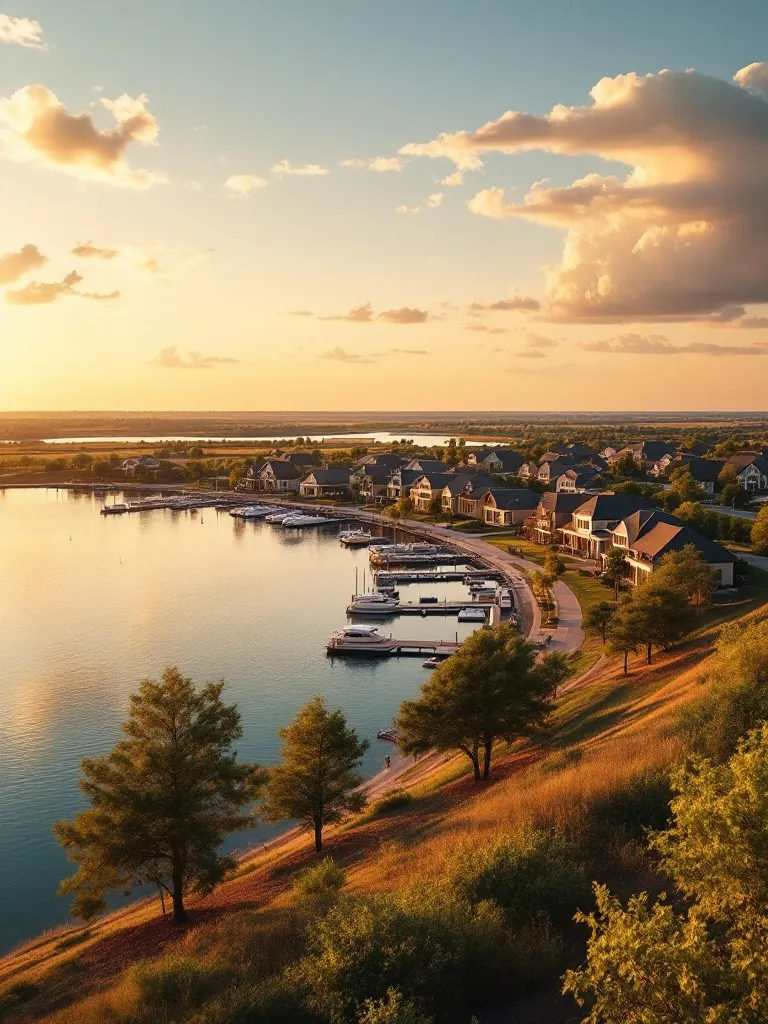 The $7B Texoma development Preston Harbor, Denison
  Texas' newest lake Bois d'Arc Lake land
 Buying raw acreage near the water instead of a house? See my ranch & land guide and the Grayson County land rules. Moving in from out of state? Start with my relocation guide and the property-tax and homestead-exemption guide. Weighing the two biggest lakes head to head? Read Lake Texoma vs. Lake Ray Hubbard.
The answer no listing gives you
There is no shortcut on the water. The only answer is to verify the exact deed, survey, permit history, and access rights for the specific home — on the specific lake.
That verification is the first thing I do on any waterfront purchase, with the title company and the agency that owns the lake, because deeded-versus-leased land, dock and slip rights, whether those rights transfer when you buy, and the seasonal water level can all affect financing, appraisal, and what you're actually allowed to do at the water. I walk you through it before you're deep in a deal.
Get my read on a North Texas waterfront homeCommon questions
North Texas waterfront questions
Which North Texas lake should I buy a home on?
It comes down to how far you want to be from the Metroplex, how you'll use the water, and your budget. Lake Ray Hubbard (Rockwall, Rowlett, Garland, Heath) is the closest big-lake living to Dallas, so it commands a convenience premium. Lake Texoma, up on the Texas–Oklahoma line, is far bigger and more recreation-driven, with everything from cabins to waterfront estates and often more water for the money. Bois d'Arc Lake near Bonham is brand new and mostly a land play right now. I match the lake to how you actually plan to live on it before we ever look at a specific house.
Do you own the land down to the water on a North Texas lake?
Usually not. On every major North Texas lake the shoreline is owned by a public body — the U.S. Army Corps of Engineers on Lake Texoma, the City of Dallas on Lake Ray Hubbard, the North Texas Municipal Water District on Bois d'Arc. You typically own the home and the lot in fee simple, but your deeded land stops short of the water, and the strip at the edge is governed by that agency. Exactly where your line falls, and what you may do at the water, is set by the survey, deed and the lake's rules for each property — which is one of the first things I verify for you.
Can you build a boat dock on any lakefront lot?
No. On Lake Texoma a private dock is a Corps of Engineers permit, and topography plus the Shoreline Management Plan decide which coves are even eligible. On Lake Ray Hubbard you first sublease the shoreline 'take' strip through your city, then get a city permit, and a seller's existing dock does not automatically transfer — the new owner re-applies. So a waterfront lot does not automatically come with the right to a dock. A home that already carries permitted dock rights is worth more for it, and I confirm dock eligibility and what conveys before you commit.
Is Lake Ray Hubbard or Lake Texoma better for a waterfront home?
Neither is 'better' — they're different buys. Ray Hubbard is inside the Metroplex, so it's the easy weekend-and-weekday lake close to Dallas jobs, with gated lake communities in Rockwall and Heath and a walkable harbor district; you pay for that proximity. Texoma is a far larger, more recreational lake up on the Oklahoma line, where the same budget often buys more water, and the big federal reservoir carries its own Corps rules. If you want the lake in your daily life, Ray Hubbard; if you want more water and a getaway feel, Texoma. I'll show you honest comps on both.
How much do waterfront homes cost in North Texas?
There's no single number — the water drives everything, and it varies by lake. On Lake Ray Hubbard, true lakefront with a dock generally starts around $600,000 and marquee estates run into the multi-millions, while lake-area condos and water-view homes can start far lower. On Lake Texoma, true waterfront on the Texas shore generally runs from the high $300,000s into seven figures depending on the lot, the shoreline, and whether a permitted dock conveys. A citywide median misleads here, because a waterfront home and an inland one share a ZIP code but not a market. I pull live, address-specific comparable sales for the exact lake and access you're after. (Figures roughly stated, mid-2026, and they move.)
Can I buy a North Texas waterfront home from out of state?
Yes, and many lake buyers do. I run live video walkthroughs, attend inspections for you, and verify the details that matter most on the water — deeded versus leased land, dock and slip rights, which agency and which city's rules apply, and how the seasonal lake level affects the lot — then plan a focused trip so you see the right homes in person. My relocation guide walks through buying remotely and the Texas property-tax picture.
Who is the best North Texas waterfront agent?
On the water, the best agent is the one who knows the lake, not just the house. What makes or breaks a North Texas waterfront purchase sits outside a normal home search: who owns the shoreline (the Corps on Texoma, the City of Dallas on Ray Hubbard, a water district on Bois d'Arc), whether a dock is permitted and whether those rights transfer when you buy, where your deeded line actually falls, and how the reservoir's level moves. Nychole Baxter verifies exactly those things — with the title company and the governing agency — before a buyer is deep in a deal, and shows waterfront, water-access and lake-view options so the trade is theirs to make. She's a REALTOR®, not the Corps or the city, so she confirms every shoreline right in writing rather than assuming it from a listing. The way to judge that is a conversation about the specific stretch of water you're after.
Free download
The Lake-Country & Land Buyer's Checklist
Before you pay a waterfront premium, know what you can actually own: who owns each shoreline, whether the dock is a permit you can even get, and whether those rights transfer when you buy.
- Who owns the shoreline on Texoma, Ray Hubbard and Bois d'Arc
- Why a dock is a permission, not a given — and not every lot qualifies
- The dock and shoreline rights that don't transfer to you at closing
- A before-you-write-an-offer checklist for land and lake lots
Let's find your water
Buy the lake first, then the house.
Tell me how you picture using the water — a dock in your back yard, a slip a street back, or just the view — how far from the city you want to be, and roughly when. I'll tell you which lake fits, then put together a short list with a straight read on the price, the dock and shoreline rights, and the fine print for each. No pressure, no obligation.