Grayson County · land and acreage
Buying land here? Start with the plat.
In Grayson County a tract can be legally sold and still be a tract you cannot build on. Here are the county rules that decide it, and the order I check them in.
Land is a records purchase
Out here the thing that decides value is not what you can see from the road. It is what the county has on file.

The two-minute version
What actually governs a tract here
Five things decide whether a piece of Grayson County ground is worth buying, and four of them are documents. Current as of July 2026, from the county's adopted regulations and the Texas statutes rather than from listing sites.
- Where
- Grayson County sits on the Oklahoma line north of Collin County, along US 75 between Van Alstyne and Denison, with Sherman as the county seat.
- Who regulates the land
- The county, not a city, for anything outside municipal limits. Grayson County is TCEQ's delegated Authorized Agent for septic, working through a certified Designated Representative.
- The permit that governs everything
- Septic. In Grayson County an on-site sewage facility permit is required regardless of tract size, which is stricter than the state minimum, and no permit means no house.
- The document that decides buildability
- The recorded plat. Two of the county's eight platting exemptions leave a tract unable to get an address or a septic permit until it is properly platted.
- The tax question
- Whether the ag valuation survives your purchase, and what a rollback would cost. Since June 2021 a rollback is three years of recaptured tax with no interest.
Buildability
Can this tract be built on at all?
Grayson County lists eight exceptions to platting, and they do not all mean the same thing. Two of them leave a tract legally sellable but unable to get an address or a septic permit. One of them does not. A seller saying "it is exempt" tells you nothing until you know which exemption they mean.
Which of these two is your tract?
Can be built on
Exempt, and still buildable
The over-10-acre exemption · section 8.1
When every resulting tract is over 10 acres, the split is exempt from platting and carries no address or septic disability. This is the common, clean case, and it is why plenty of large-acreage tracts change hands here with no plat and no problem. You still need a septic permit, and you still need the soil to take a system.
Cannot be built on yet
Exempt, and not buildable yet
Phased · section 8.3 and Agricultural use · section 8.4
Both of these say it outright in the regulations: properties subdividing under the exemption are not eligible for an E911 address or an OSSF permit. The county reinforces it twice more. No permit issues for a lot in a subdivision without an approved plat, and the septic office will not accept an application without a current 911 address to put on it. The tract is sellable. It is not buildable until it is properly platted.
Two things that keep this fair
This is a condition, not a death sentence. The regulations contemplate exactly this: a division that starts out exempt requires approval at the point where real development is proposed. Plat it properly and it becomes buildable. What you cannot do is assume the seller already handled it.
The agricultural-use exemption also ends itself. The regulations say that if a daughter tract stops being used primarily for agriculture, the platting requirements apply. Building a house is that change of use. So the exemption that let the tract be created is the same one your plans will terminate.
I am a REALTOR®, not an engineer or an attorney. My job is to make sure that paper exists, and that the right specialists have read it, before you commit.
The permit that gates the house
Septic decides more than you think
Grayson County requires a septic permit regardless of the size of the tract. That is a local rule the county adopted on purpose, and a stricter local rule takes precedence over the state standard. It matters because Texas exempts single-family tracts of ten acres and up at the state level, and buyers arrive expecting that to apply here. It does not.
Lot size then drives two separate rules that get tangled together constantly. Any tract under 2.5 acres requires an aerobic system, which costs more up front and carries a maintenance contract for as long as you own it. That trigger is purely about acreage. It has nothing to do with whether you are on public water or a well.
Your water source drives the other rule, the minimum lot size the county will permit a system on at all. Without public water it is 1.5 acres, or 1 acre with subsurface drip irrigation. With public water it is 1 acre, or half an acre with drip. Watch where those two rules meet: a 1-acre lot on public water clears the minimum and still needs an aerobic system, because it is under 2.5 acres.
One more that most summaries state too absolutely. If a public sewage system runs within 100 feet of the property, you are required to use it, unless you get written approval from the County Engineer. The waiver is real and it is part of the rule.
Before you count on a meter
Water is a written answer, not a map
Rural Grayson County is served by a set of water supply corporations and districts rather than one utility, each holding a certificated service area. Which one covers a given parcel is a question for the county's service-area records, not for a neighbor's recollection, and I check it per address rather than by region.
When land is subdivided, the county requires a will-serve letter from the water, sewer, electric and natural gas providers certifying existing capacity with an effective date of service. That date is the part that stops projects. A supplier who cannot say when service begins can hold up a plat regardless of how close the line runs. If a subdivision proposes individual wells, the county may additionally require a professional engineer's report certifying there is adequate groundwater.
I am not going to print a capacity status here, because availability changes without notice and a number on a web page would age badly. The durable version of the advice: get the specific supplier's written answer on a meter for your address before you close, not a general assurance that water is available in the area.
Anyone can show you the land. Fewer will read the file.
The tract is the easy part. What it can become is written down in an office in Sherman, and that is the part worth getting right before you sign anything.
The tax line on the land
What the ag valuation does when you buy
The number people quote is 10 acres, and it is a reasonable planning number. It is not a wall. The appraisal district sets minimums by agricultural use rather than one blanket figure, and it states plainly that the guidelines are a general guide with exceptions handled case by case by the Chief Appraiser.
Do not confuse that 10 with the platting exemption's 10. They are unrelated rules that happen to share a number. One is about whether a split needed a plat. The other is about how the land is taxed.
The requirement that surprises buyers is history. The district generally wants proof of qualifying agricultural use in five of the seven preceding years, and the valuation follows the land's use rather than the deed. It does not arrive automatically because you bought land that had it.
If the use changes, a rollback recaptures three years of the difference, with no interest since June 2021. Worth knowing where that gets misquoted: the appraisal district's own agricultural guidelines, in the current April 2025 revision, still print the repealed five percent interest. The statute controls. I walk through the whole mechanic, including the homesite carve-out, in my guide to ag valuation in Grayson and Fannin County.
The part that changes the math
Why buy land here now, and why you might not
The news out of Grayson County is real. Two of the four below are further along than the coverage suggests, and two are further away. Here is where each one stands as of July 2026, because what you pay should reflect what exists rather than what was announced.
- Texas Instruments, Sherman
- SM1 has been in production since December 2025. SM2 is a completed shell with cleanroom and tool installation starting later in 2026. A third and fourth fab are planned, and TI's own wording is that they get built in alignment with market demand, which is optionality rather than commitment. The figure worth watching is capital: TI guided 2026 capital spending to roughly $2 to $3 billion, down from about $4.6 billion in 2025. The construction phase that drove the last four years here is winding down, not ramping up. The often-quoted 3,000 jobs is a ceiling at full four-fab buildout.
- Preston Harbor, Denison
- Craig International's development on Lake Texoma. As of July 2026 that means 286 phase-one lots graded, water and sewer work just beginning, a 2.5-mile arterial road underway, and an amenity center breaking ground this summer. Denison extended the project's reinvestment zone by ten years to match the bond period. Streets and utilities are targeted for the end of the first quarter of 2027, with houses after that. No homes have been delivered. The $7 billion number is the developer's own projection of total buildout value through roughly 2035, not money spent.
- US 75 at FM 121
- The interchange is funded at $67.2 million as a Tier One project in TxDOT's ten-year plan, with construction as early as the fourth quarter of 2027 and about two years of it. Van Alstyne is contributing $4.5 million and the county $1.5 million. Worth knowing: the widening already underway on the main lanes did not include the FM 121 bridge, which is why the bottleneck is still there. You live through the construction before you get the improvement.
- What land is actually doing
- There is no county-level price series for Grayson land. The nearest real data is regional: Texas A&M's Northeast Texas region ran about $9,313 an acre in the third quarter of 2025, up 4.4 percent year over year, on sales volume down 18.3 percent. Read those two together. Prices holding while volume falls that far is a thin market, where sellers hold out and buyers step back rather than one where demand is surging. And because the region blends rural counties with metro-fringe ones, it understates corridor land and overstates remote land.
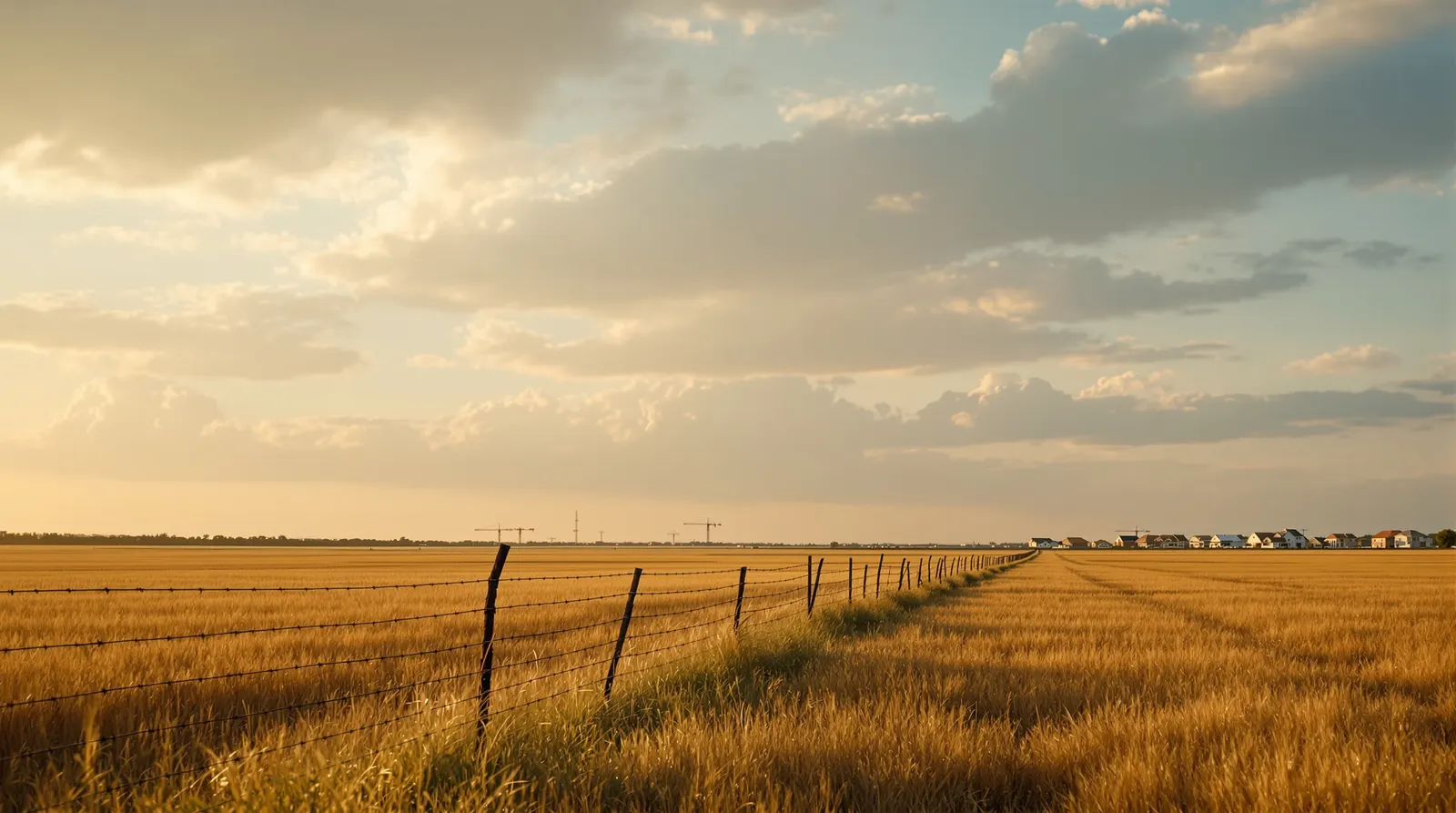
The same tract is a good buy for one of these people and a bad buy for another, and no headline can tell them apart. So: what do you want the ground for?
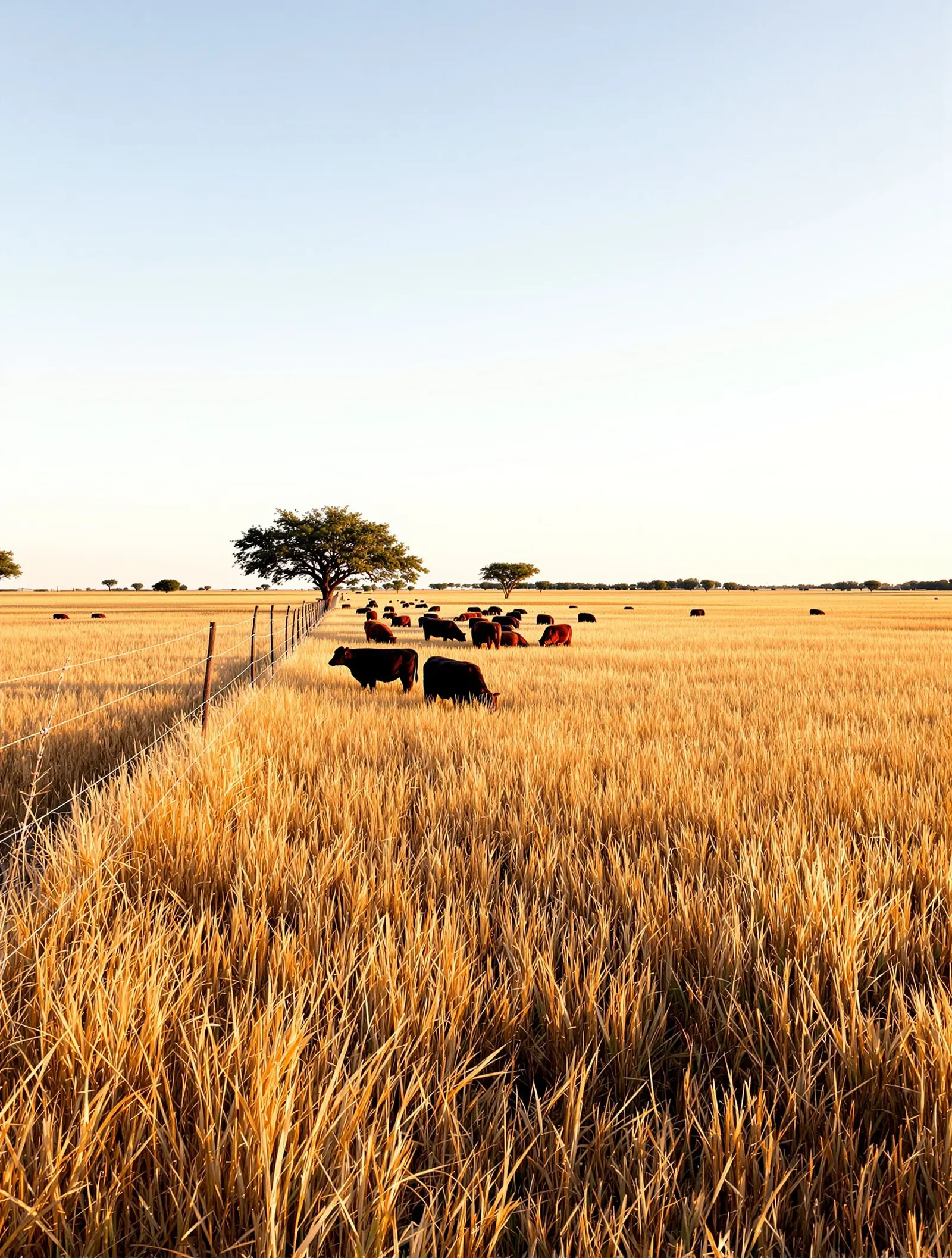
For cattle or a working ag operation
Buy it, just not on US 75
The corridor is the worst value in the county for you, and it is where every listing you get sent will be. Land within sight of the highway is priced on what might get built on it later, and grass does not earn at that number no matter how well you run it. Move east or west of US 75 and the same money buys ground that pays for itself, because you stop paying for the development option you are never going to exercise. When I price a tract for a cattle buyer I am valuing forage and water, not proximity to a fab.
To build a home or an estate
Buy now, and buy it for the life
This is the one I would tell you to go ahead with today, because none of the news has to come true for it to work. The amenities, the road and the jobs either arrive or they do not, and either way you are living on land you wanted. Your worst case is that you paid too much for a place you like. What you have to get right here is mechanical rather than speculative, and it is the checklist further down this page: the rollback, the water commitment, and who controls platting on your tract. One timing note if you will commute US 75. The interchange work starts in late 2027 at the earliest and runs about two years, and you drive through all of it.
To hold for future development
Only if you can wait ten years
Much of the near-term news is already in the price, and the cycle that drove it is winding down rather than accelerating. The third and fourth fabs are explicitly demand-contingent. Preston Harbor's own buildout runs to roughly 2035. The interchange does not break ground until late 2027 at the earliest. Meanwhile sales volume at decade lows means this is an easy market to buy into and a hard one to sell out of. This can absolutely work, but it needs a ten-year horizon, no need for the money in between, and a tolerance for sitting in an illiquid market. If any of those three is missing, it is a bet rather than a hold.
Figures here are dated on purpose. Company and developer projections are labeled as projections, because a planned fab and a producing one are not the same asset and should not carry the same price. I am a REALTOR®, not a financial adviser, so this is how I read the market rather than advice on what to do with your money.
The work, in order
What I check before you write an offer
This is the sequence, and the order matters. Each one can end the conversation, so I would rather run them early and cheaply than find out during an option period that the tract was never buildable.
- The plat
- The determination
- The soil
- The water
- The valuation
- The access
I am a REALTOR®, not a surveyor, engineer, attorney or tax professional. What I do is know which of those a given tract needs, bring them in early, and make sure the county's answer is in writing before your money is at risk. Regulations here are amended more often than people expect, so I confirm current requirements with the county rather than working from a saved copy.
Across the county
Where this applies
These are county rules, so they follow the land rather than the mailing address. The same checks apply to acreage outside Van Alstyne, Sherman, Denison and Pottsboro, along with Howe, Tom Bean, Whitesboro, Bells and Collinsville. Inside a city's limits you pick up that city's requirements on top, which is its own conversation.
This is part of my wider ranch, land and acreage work across North Texas, which also covers cropland in my farm-land guide and recreational ground in my hunting-land guide. Own a Grayson tract already and want a number? Get a free land & ranch valuation. If you are looking one county east, my Fannin County guide covers that side of the line, where the appraisal district sets its own standards, and my Bois d'Arc Lake land guide adds the lake's shoreline rules on top. For waterfront specifically, the Lake Texoma guide picks up at the Grayson County shoreline.
Before the option period, not during it
Send me the address or the parcel number, and I will tell you what the county already says about it.
Whether there is a recorded plat, which exemption it was split under if there is not, what the lot size forces on your septic, who holds the water certificate, and what the ag valuation does the day you close. You get the answers and the questions to ask next, with no pressure.
Have a Grayson County tract checkedCommon questions
Grayson County land questions
Can you build a house on any land you buy in Grayson County?
No, and this is the most expensive wrong assumption in this market. Buildability in Grayson County runs through the recorded plat. The county's subdivision regulations list eight exceptions to platting, and two of them, the phased-subdivision exemption and the agricultural-use exemption, say in so many words that properties subdividing under them are not eligible for an E911 address or an on-site sewage facility permit. No address means the county will not even accept a septic application, and no septic permit means no house. The tract is not ruined, it is just not buildable until it goes through proper platting. Other exemptions do not carry that disability, so the answer depends entirely on which exemption a tract was split under. That is a records question, and it is the first one I answer.
Why would a seller split land under an exemption that blocks building?
Because full subdivision approval costs real money and takes real time, and the exemption route avoids both. A seller who wants to break a larger property into sellable pieces can do it under the phased or agricultural-use exemption quickly and cheaply, and the tracts that result are legally created and can be legally sold. That is usually not a scheme, it is just the cheapest path to a sale, and the seller may genuinely not know what it costs the buyer. The problem lands on whoever buys expecting to build. Ask the county for a written Formal Determination of Exemption Status before you write the offer, and you will know which situation you are in.
Do you need a septic permit in Grayson County on large acreage?
Yes. Grayson County requires an application, permit, authorization to construct and inspection for an on-site sewage facility regardless of the size of the tract. The county adopted that rule deliberately as a stricter local standard, and a stricter local rule takes precedence over the corresponding state requirement. That matters because Texas has a state-level exemption for single-family tracts of ten acres and up, and people arrive expecting it to apply here. In Grayson County it does not.
Does Grayson County require an aerobic septic system?
On any parcel under 2.5 acres, yes. The county order requires an aerobic treatment process for any on-site sewage facility on a tract smaller than 2.5 acres. Two things to get right about that rule, because they are widely misreported. It is a Grayson County rule rather than a state one, and it is a pure lot-size test, so it has nothing to do with whether you are on public water or a well. Aerobic systems cost more to install and carry an ongoing maintenance contract, so it belongs in your budget from the start. Water supply type does matter, but for a separate rule: it drives the minimum lot size the county will allow for a septic system at all.
What is the minimum lot size for septic in Grayson County?
It depends on your water source and your system type. Without a public water source the minimum is 1.5 acres, or 1 acre if the system uses subsurface drip irrigation. With a public water source it is 1 acre, or half an acre with subsurface drip. Non-residential uses have a higher floor and do not get the drip discount. Watch the interaction between the two rules: a 1-acre lot on public water clears the minimum lot size, but because it is still under 2.5 acres it will require an aerobic system.
Do you have to connect to public sewer in Grayson County?
If a public sewage system is within 100 feet of the property, yes, use of it is required. There is a clause worth knowing, though: the requirement can be waived with written approval from the County Engineer. Most summaries of this rule leave that part out and make it sound absolute.
How many acres do you need for an ag exemption in Grayson County?
Generally 10 acres, but that number carries two qualifiers. First, the appraisal district sets minimums by agricultural use rather than one blanket number, and most of those uses come out at 10 acres, though not all of them do. Second, and this is the part people miss, the district states plainly that its guidelines are a general guide and that exceptions are handled case by case by the Chief Appraiser. So 10 acres is the planning number, not a wall. The requirement that catches more buyers is the history: the district generally wants proof of qualifying agricultural use in five of the seven preceding years. Ag valuation does not automatically arrive with your deed.
How many acres do you need for beekeeping to qualify for ag valuation?
Between 5 and 20 acres. That range is set by state statute rather than by the county, so it is the same everywhere in Texas. Grayson County then sets the intensity standard on top of it: a minimum of six hives on the first 5 acres, plus one additional hive for each additional 2.5 acres, which works out to somewhere between six and twelve hives across the qualifying range. The hives have to be maintained and kept alive. One point in your favor: the district applies the productivity appraisal to the total acreage, not only the ground the hives sit on.
What are rollback taxes in Grayson County, and is there still interest?
A rollback is the back-tax bill that comes due when land in agricultural valuation changes to a non-agricultural use. The county recaptures the difference between the ag-value tax and the full market-value tax for the three years before the change. There is no interest. House Bill 3833 removed the interest provision effective June 15, 2021. This is worth checking your sources on, because Grayson CAD's own agricultural guidelines, in the current April 2025 revision, still print the repealed five percent interest. The statute controls. If a number you were quoted came off a county handout, check the date on the handout.
What is a will-serve letter and why does it matter for land?
It is a utility's written certification that it can actually serve a development, and Grayson County requires one from the water, sewer, electric and natural gas providers when you subdivide. The operative language is that the provider certifies existing capacity with an effective date of service. That date is the chokepoint. A supplier that will not commit to when service starts can stop a plat, which is why availability is a question to settle in writing early rather than assume from a map. If a subdivision proposes individual wells, the county may also require a professional engineer's report certifying adequate groundwater.
Does a metes and bounds deed avoid the platting requirement?
No. State law is explicit that a division counts regardless of the method used, whether that is a metes and bounds description in a deed, a contract for deed, a contract of sale, or any other method. Dividing a tract outside city limits into two or more parts to lay out a subdivision or lots triggers the platting requirement on its own terms. The deed language does not change what happened to the land.
Who is the best REALTOR® for buying land in Grayson County?
The right agent for county land is one who works the records rather than the listing photos, because out here the things that decide value are not visible on a walk-through. Whether a tract carries a recorded plat or was split under an exemption that blocks an address and a septic permit. Whether the soil will take a system, and which system the lot size forces. Which water supplier holds the certificate for that parcel and whether they will commit to a meter in writing. What the ag valuation does on closing and what a rollback would actually cost now that the interest is gone. That is the work Nychole Baxter does across Grayson, Fannin, Collin, Hunt and Cooke counties, as someone who owns land and runs cattle rather than someone reading about it. She is a REALTOR®, not an engineer, surveyor or tax advisor, so she brings in the site evaluator, the surveyor and the tax professional a deal needs and makes sure the questions get asked before the offer. The way to judge that is a conversation about the specific tract you are looking at.
Free download
The Lake-Country & Land Buyer's Checklist
The read I run before a buyer commits to Grayson County ground: the platting and OSSF-septic traps that stop a house before it starts, plus minerals, flood plain, access and the ag-valuation rollback.
- The platting trap that can stop a tract from getting an address or a septic permit
- Whether the ground will actually take a permitted OSSF septic system
- Minerals, flood plain, legal access, and the ag-valuation rollback tax
- A before-you-write-an-offer checklist you can use on any parcel
Land is worth getting right
Let's read the file together.
Send me the address or the parcel number of whatever you are considering, ten acres outside Van Alstyne or a bigger piece toward the county line. I will tell you what is buildable, what it would take to get there, and what it should cost you.
County regulations and appraisal district guidelines current as of July 2026. Both are amended regularly, so I confirm the current requirement for your specific parcel rather than relying on a saved copy.