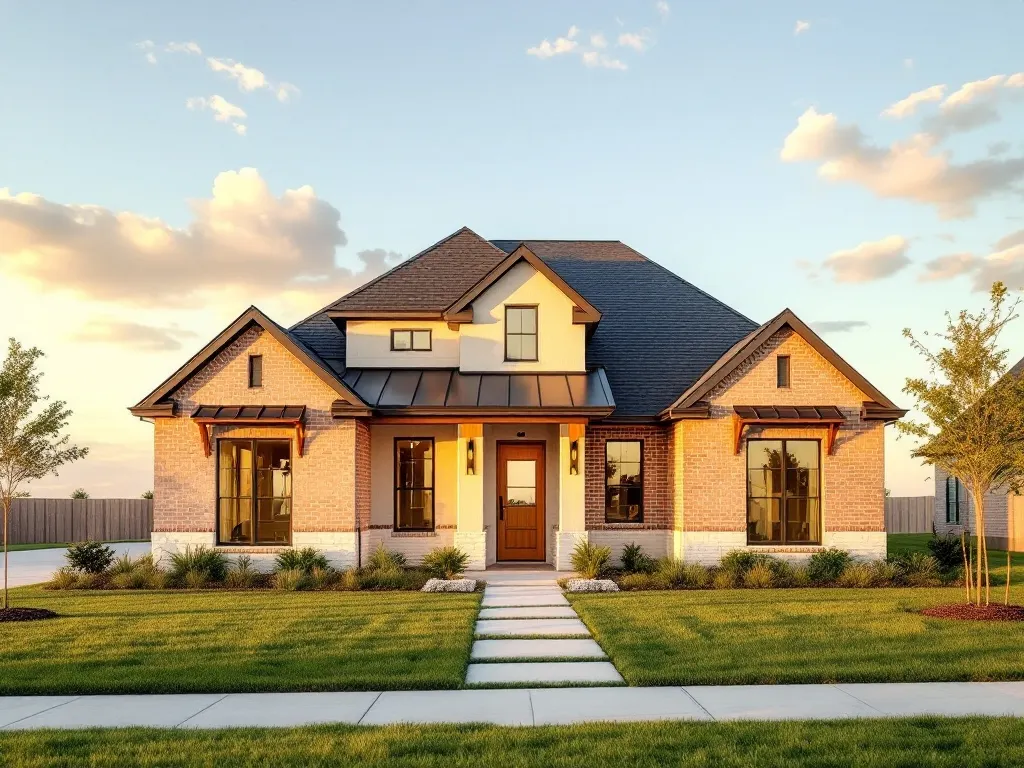
I once watched an agent tell a veteran that the house he loved “couldn’t go VA.” The listing didn’t have VA in the financing line, so the agent crossed it off and moved on. Here’s the part that still bothers me: that same listing said it would take FHA. A VA appraisal and an FHA appraisal check almost the same minimum property standards. The home that supposedly couldn’t go VA would have appraised fine. A family nearly lost a house they’d earned the right to buy, because the person guiding them didn’t know the benefit.
That is not a rare story in North Texas. It is close to the norm. And it costs veterans homes, money, and years of wealth they never knew was on the table.
This is the long version of what a VA loan actually is, the myths that get in the way, and how veterans use their benefits to build a real estate portfolio instead of just one house. I am a REALTOR®, not a lender, a tax advisor, or a financial advisor. Treat this as a plain-English map, then run the specifics with a VA-approved lender, the Texas Veterans Land Board, and your own tax professional before you act.
Why so many North Texas agents fumble a VA loan
Skill follows repetition. Agents get good at the deals their market hands them over and over, and North Texas hands out very few VA purchases, because there is no large active-duty installation here. The nearest military presence is a joint reserve base near Fort Worth. The big active-duty posts, Fort Cavazos down by Killeen and Sheppard Air Force Base up in Wichita Falls, are hours away. Without a steady stream of service members buying homes, a local agent can go a whole career and barely touch a VA file.
I learned the benefit in the opposite kind of market. For four years I sold real estate around Joint Base Lewis-McChord in Washington, one of the largest military installations on the West Coast. A huge share of my buyers were active-duty and veteran families, and VA was the everyday loan, not the exotic one. My husband is a U.S. Army veteran, and our own family has bought with his VA benefit more than once, so I have sat on the buyer’s side of a VA closing myself. I brought that to North Texas, where it is genuinely rare.
That gap is the whole reason this article exists. The benefit is powerful. The problem is almost always the guidance around it.
The myth that costs veterans homes: “it can’t go VA”
Start with the myth that nearly cost that family their house, because it is the one that does the most damage.
A listing’s financing line, the little field that says “Cash, Conventional, FHA,” is not a legal ruling on the property. It is what a seller or a listing agent typed in. Sometimes they leave VA off out of an old bias. Sometimes they simply forgot. Either way, it decides nothing about whether the home can actually close with a VA loan.
Here is the fact that ends the argument. The VA and FHA appraisal both exist to protect the buyer, and they check very similar things: that the home is safe, structurally sound, and sanitary. The VA calls them Minimum Property Requirements; FHA calls its version minimum property standards. Neither is a home inspection, and neither is meaningfully stricter than the other on the conditions most sellers worry about. So a home marked as taking FHA financing will, in almost every case, clear the VA bar too.
An agent who accepts FHA on a listing but refuses VA on the same house is contradicting themselves and does not realize it. The right move is not to walk away because of a dropdown menu. It is to ask, to write the offer, and to let the VA appraisal make the actual call. That one habit puts homes back on the table that a less-familiar agent quietly removes.
What a VA loan actually is: a reusable tool, not a starter coupon
Most people, including plenty of agents, picture the VA loan as a single favor: one zero-down mortgage on one modest first house, and then you graduate to “real” loans. That picture leaves most of the benefit sitting unused.
A VA loan is better understood as a reusable line of buying power you carry for life. No down payment on a primary home. No monthly mortgage insurance, which keeps the payment lower than a comparable FHA or low-down conventional loan. A one-time funding fee that is waived entirely for veterans receiving compensation for a service-connected disability. And an entitlement that can be restored and used again, sometimes more than once at the same time.
Once you see it as reusable buying power instead of a one-time coupon, the strategies open up. Here are the four that build the most wealth.
Play 1: house-hack a small multifamily with zero down
A VA loan can finance a two, three, or four-unit property, not only a single-family home, as long as you live in one of the units as your primary residence. You move into one door; you rent the others.
This is the same “house hacking” that investors pay full price and put 20% or more down to do. A veteran can do it with zero down and no monthly mortgage insurance. Your tenants’ rent goes toward the mortgage on a building you own, which can drop your own cost of living to a fraction of a normal payment, sometimes to nothing. When you move on later, you can keep the property as a rental and take the whole rent roll.
A few real rules to plan around, which your lender confirms: you generally have to occupy your unit within 60 days of closing; lenders usually count about 75% of the projected market rent when they qualify you; and on three and four-unit purchases some lenders apply a self-sufficiency test, where the rental income has to cover the payment. None of that is a reason to skip it. It is a reason to work with people who have done it.

Play 2: keep the house, take the benefit with you
Military life moves you, and the VA benefit is built for it. You do not have to sell your first home to buy the next one with a VA loan.
It works through what is called second-tier or bonus entitlement. When you buy your first home, you use part of your entitlement. If you later move and want to keep the first house as a rental, you may have enough entitlement left to buy again with another VA loan, holding two at once. How much you have left, and whether any down payment is needed on the second, depends on the county loan limit and what is still committed to the first loan. In 2026 the figure most counties work from is a $832,750 baseline, but your lender runs your actual Certificate of Eligibility.
Do this two or three times over a career and the shape of it is a small portfolio: a string of homes you once lived in, now rented, each bought with little or nothing down. That is how a lot of career military families quietly end up with more doors than agents who never served.
Play 3: assume a veteran’s low-rate VA loan
This one matters more than usual right now, with rates well above the lows of a few years ago. VA loans are assumable. A qualified buyer can take over a veteran seller’s existing VA loan, including its interest rate. If that seller locked a 2.5% or 3% rate, the buyer inherits it, which can mean a dramatically lower payment than today’s market.
Two things to understand before you chase one. A non-veteran can assume a VA loan, but the veteran seller’s entitlement usually stays tied up in that home until the loan is paid off or refinanced, which can block their own next VA purchase. If a veteran buyer assumes it and substitutes their own entitlement, the seller’s benefit is freed. Either way the seller should insist on a formal release of liability through the servicer and the VA. Handled right, an assumption is one of the best deals in the market. Handled carelessly, it strands a veteran’s benefit. This is exactly the kind of thing an agent who knows VA watches for.
Play 4: build new with a VA one-time-close construction loan
Your benefit is not limited to resale homes. You can use a VA loan on a finished builder home, on one still under construction, and, in a growing number of cases, as a true VA one-time-close construction loan that rolls the land, the build, and the permanent mortgage into a single closing with no second qualification.
The catch on new construction is the same one that catches buyers everywhere: the agent standing in the model home works for the builder, not for you. When you walk in without your own representation and use their preferred process, no one at that table is protecting your benefit or your interests. I represent VA buyers through the build, and I know which North Texas builders and homes actually work cleanly with a VA purchase. If a new home is where you are headed, my new-construction guide covers the first-visit rule that keeps you represented.
The Texas layer most agents never mention: the Veterans Land Board
Here is where even agents who know VA loans usually go quiet, because this part is not federal. Texas runs its own set of veteran programs through the Texas Veterans Land Board, part of the General Land Office. If you want to build wealth through land, this is the door most people never hear about.
The VLB land loan lets eligible Texas veterans and military members buy land, at least one acre, with as little as 5% down at a below-market fixed rate, borrowing up to $200,000 (or up to $275,000 for two eligible veteran spouses). Financing raw land is normally hard and expensive; a conventional land loan often wants 20% to 50% down. Five percent down on acreage, at a state-subsidized rate, is a genuinely different game, and it is how a veteran starts assembling land most buyers can’t touch.
The VLB also runs a home loan program (up to $832,750, little or no down) and a home-improvement loan (up to $50,000) on the same veteran-friendly terms. These stack with, or stand apart from, your federal VA benefit depending on the purchase. Amounts and rates change, so confirm the current numbers directly with the Texas Veterans Land Board.
The disabled-veteran multiplier
If you carry a service-connected disability rating, two more advantages change the math, and together they act like a multiplier on everything above.
First, the funding fee on a VA loan is waived for veterans receiving compensation for a service-connected disability, which removes a cost every other VA buyer pays. Second, the VLB gives an added interest-rate discount to veterans with a 30% or higher rating on its land and home loans, on top of the already below-market rate.
Then there is the big one for cash flow: the Texas disabled-veteran property-tax exemption. The relief scales with your rating, and at a 100% permanent and total rating it can wipe out the property tax on your residence homestead entirely. Think about what that does to a house hack. If your primary home, one unit of a fourplex, carries little or no property tax, and the funding fee is waived, and the other three units are paying the mortgage, the numbers get very hard to beat. You file the exemption with your county appraisal district, not with me, and the rules can change, so confirm with the district and the Texas Comptroller. My property-tax guide covers how North Texas homeowners keep that bill in check.
Putting it together: a real Sherman fourplex, with real numbers
Enough national averages. Let me run this on real North Texas dirt, in Sherman, where the Texas Instruments fab is pulling in workers who all need somewhere to live.
The land. The Texas Veterans Land Board land loan has a one-acre minimum, so this play fits a veteran buying a full acre or more, which is common on the growing edges of Sherman and Denison. A buildable acre with city water and sewer there runs roughly $90,000 to $130,000; call it $110,000. Through the VLB, a veteran buys it with about 5% down, near $5,500 to control an acre, where a conventional land loan would want $22,000 to $55,000. An acre is room enough for a fourplex with land to spare.
The build. A two-story, four-unit building of modest units runs on the order of $175,000 to $190,000 a door in this market, so figure about $700,000 to $760,000 to build, plus site work and soft costs. All-in, land included, you are near $870,000.
The rents. Average rent in Sherman is about $1,539 a month, and new construction rents above the average. Four new units at roughly $1,550 each is about $6,200 a month in gross rent.
One thing to fix before the exits, because it is exactly what an unfamiliar agent gets wrong. The two selling exits below are developer moves on developer financing: the VLB land loan for the dirt, a construction loan for the build, and the units platted as separate lots or filed under a condominium regime (Texas Uniform Condominium Act) so they can be sold one at a time. You cannot use a VA loan to build a fourplex and sell the units off — a VA loan is for the home you live in. The VA loan is the hold. Here is how each of the three paths comes out.
The through-line is the one you would want. Cheap money down through the VLB, build once, and choose your exit: cash out for a developer’s profit, keep one and live nearly free, or hold and let three tenants compound your equity. The developer exits carry real risk, real construction management, and a personal guarantee, so they are not a first-timer’s solo move. But veterans do this, and between the VA loan and the VLB, a veteran sits down at it for a fraction of the cash anyone else would need.
And a fourplex is only the entry version
One four-unit building is where this starts, not where it ends. Aimed at the right lot, the same benefit scales in ways most veterans never hear spelled out.
Density. Zoned for townhomes, an acre can hold eight to twelve units instead of four. More doors on the same dirt spread the land cost and can multiply the profit on a single project. It also turns one building into a real subdivision, with its own zoning, platting, and approvals.
Finish and market. A modest Sherman unit sells near $285,000. The same-size townhome in a Collin County growth corridor can sell from $450,000 to $700,000. The build costs more and so does the land, which is why the winning move is almost never the most expensive product on the block. It is the right product for that block, and knowing the difference is the game.
Stacking the veteran-only levers. The VLB land loan, a VA construction loan, the funding-fee waiver, and the disabled-veteran rate discount and tax exemption will not all apply to every deal, and the VLB’s one-acre minimum and loan limit quietly decide which markets even qualify. Lined up right for your situation, they are an edge no civilian developer has.
Here is the catch, and the reason I will not hand you a formula off a blog post. The best version of this is never a template. It turns on your entitlement, your disability rating, the specific lot, how it is zoned, and what that exact block will pay for a finished unit. Miss one and a promising deal becomes an expensive lesson. Line them up, and a veteran walks into a development almost no one else can.
That is the conversation worth having before you buy anything. Bring me your eligibility and the market you are watching, and I will map the real deal: how many doors the land will hold, which exit pays best, and where your benefits stack into an advantage that is yours alone. Tell me what you are working with, and we will find the ceiling on your situation, not a generic one.
Who I am to tell you this
I represent buyers and sellers across all of North Texas, from Collin, Denton, and Grayson down through Dallas and Rockwall, and I reach further out for land and acreage. You can see the full map on my areas-served page. But for veterans, the credential that matters is where I learned this: four years selling around Joint Base Lewis-McChord, a military family of my own, and a benefit I have used from the buyer’s side, not just read about.
I am the REALTOR® on your side, not the lender. I pair you with VA-approved lenders and the VLB, and I make the home, the contract, the appraisal, and the strategy all work together. If any agent has ever told you a house “can’t go VA,” or that your benefit is a one-time thing, let’s have a different conversation.
You earned every one of these benefits. Let’s use all of them. Grab the free VA Buyer’s Playbook — this whole framework, the myths, the wealth plays, and a before-you-offer checklist, in one printable guide — or tell me where you’re headed and we’ll map it to your situation.
I am a REALTOR® with Real Broker, LLC (Bachman Realty Group), not a mortgage lender, tax advisor, financial advisor, or attorney, and nothing here is a guarantee of a loan, an exemption, or an investment result. VA loan terms come from a VA-approved lender; Texas Veterans Land Board terms come from the VLB; property-tax exemptions are filed with and decided by your county appraisal district. Confirm all current figures and your own eligibility with those sources before you act.