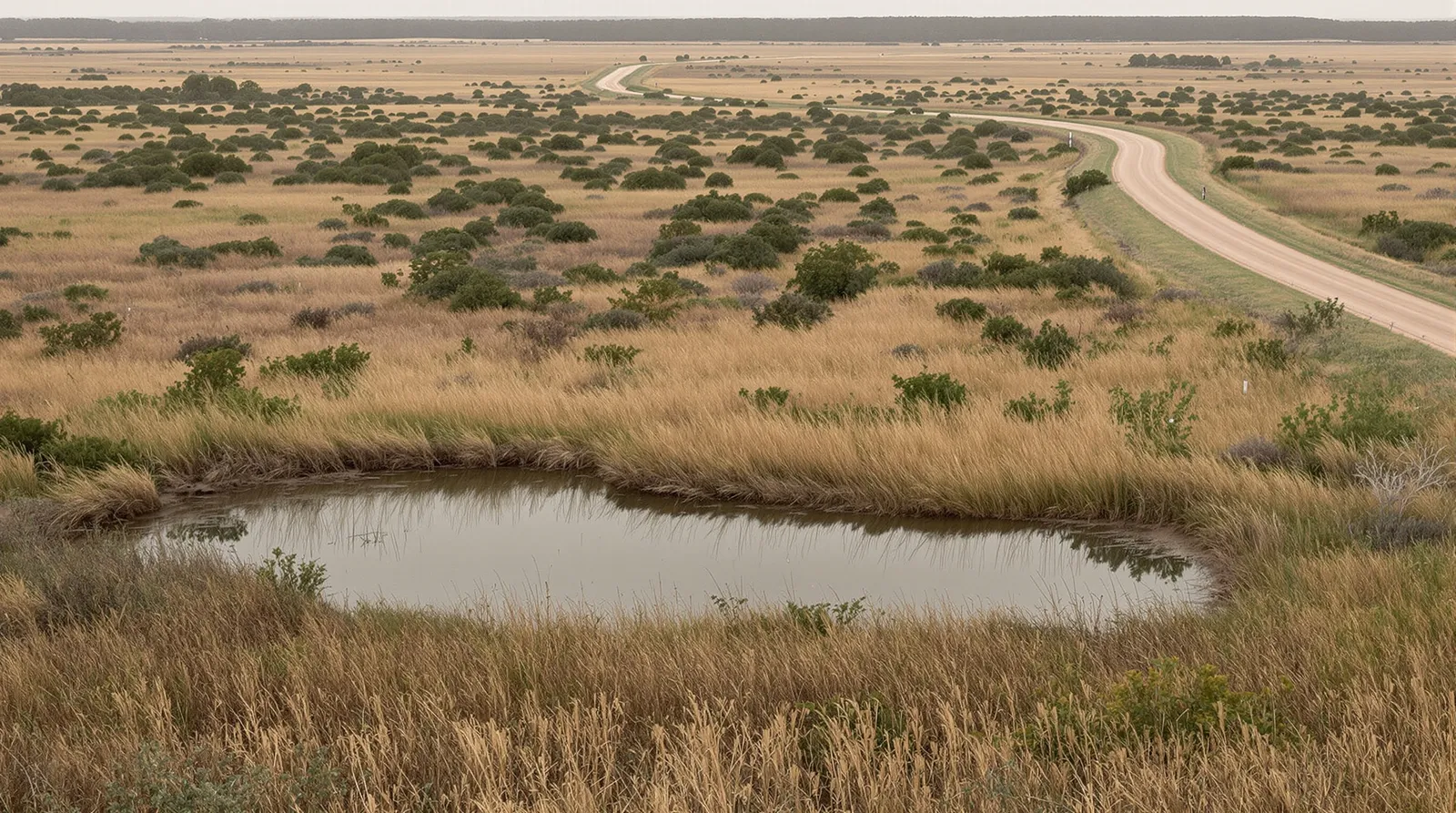
Almost everyone calls it a wildlife exemption. It is one of the most useful and most misunderstood tools a North Texas landowner has, and the name gets the most important thing about it wrong. It is not an exemption you file once and keep, and it is not a way to get a tax break on bare land. It is a wildlife-management valuation, a form of the same open-space agricultural valuation people already know, and it lets you hold your land at ag-level property taxes while you manage it for native wildlife instead of running cattle.
That last part is why it matters so much up here right now. As big ranches near the growth path get carved into smaller pieces, plenty of those pieces are too small to run cattle the way the land used to, but they can still be managed for deer, quail, dove and songbirds and keep the low tax. Below I walk through what the valuation actually is, the one rule that trips everyone up, how you qualify, how many acres you really need by ecoregion, and how to keep from losing it. I am a REALTOR®, not a wildlife biologist or a tax advisor, so treat this as a plain-English map, then confirm the specifics with the county appraisal district and Texas Parks and Wildlife before you act.
What is a wildlife exemption in Texas?
It is a special way of valuing your land for property taxes, not an exemption in the usual sense. Texas taxes qualifying open-space land on its agricultural productivity value rather than what it would sell for on the market, which is why the tax bill on ranch and farm land is so much lower than on a subdivided lot. A wildlife-management valuation keeps that same productivity value in place while you manage the land for native wild animals instead of grazing it or farming it.
The Texas Tax Code, in Section 23.51, defines wildlife management as actively using land that already qualifies as open-space agricultural land in at least three of seven approved ways, in order to sustain a breeding, migrating or wintering population of indigenous wildlife. Texas voters added it as a qualifying agricultural use back in 1995. So legally it sits inside the ag-valuation system, not beside it. That single fact explains almost everything else about how it works.
Want to know whether a specific tract already carries the ag valuation this depends on? Tell me the parcel or the area and I will check its current status with the appraisal district before you rely on it.
Is a wildlife exemption the same as an ag exemption?
It is the same valuation, reached by a different kind of work. Under an ag valuation you earn the low tax with grazing, hay or a crop. Under a wildlife-management valuation you earn it by managing habitat for native species. Either way the county taxes the land on productivity value, so the tax bill lands in the same place. If you already understand the ag valuation on Grayson and Fannin County land, you already understand most of this. Wildlife management is one more qualifying use under that same umbrella.
The difference that matters is what each one asks of you year to year. Cattle mean fences, water, working pens and a stocking rate the district can check. Wildlife management means habitat practices and record-keeping instead. For a landowner who does not want to run livestock, or whose tract is no longer big enough to run them well, that trade is the entire point.
The one rule that trips everyone up
Here it is plainly: your land has to already carry an agricultural valuation before you can convert it to wildlife management. You cannot take raw, un-qualified land straight to a wildlife exemption.
Tax Code Section 23.51 is specific about this. The land must be appraised as qualified open-space agricultural land, or qualified timber land, at the time the wildlife-management use begins. So the real-world path is almost always the same: buy or hold land that is already in ag valuation, keep that valuation alive without a gap, then switch the use to wildlife management. If the ag valuation has lapsed, or the land never had one, you generally have to establish qualifying agricultural use first and wait out the district’s history requirement, which in these counties commonly means showing agricultural use in five of the past seven years, before wildlife management is even on the table. That is years, not months, so it is not a decision to fix after closing.
This is exactly why I verify the current ag status of any tract before a buyer writes an offer. A listing that says “ag exempt” is a starting point to confirm, not a fact to trust, because if that valuation is not actually in place and current, the wildlife plan you were counting on cannot attach to anything.
Thinking about a tract and counting on the tax staying low? Send me the address and I will confirm the valuation is real and current before you are committed.
How do you qualify? The three-of-seven rule
Once the land qualifies as open-space, you keep the valuation by actively performing at least three of seven approved wildlife-management practices, and documenting them. The seven, straight from Tax Code Section 23.51, are:
- Habitat control (managing brush, grass and native plants for wildlife).
- Erosion control.
- Predator control.
- Providing supplemental water (guzzlers, troughs, a managed pond).
- Providing supplemental food (food plots, feeders, managed native forage).
- Providing shelter (brush piles, nest boxes, cover plantings).
- Making census counts (surveys to track the population you are managing for).
You pick at least three and actually do them, to the level Texas Parks and Wildlife considers adequate for your region. This is not a paperwork-only exemption. The state expects real, ongoing habitat work, and the county can ask you to show it.
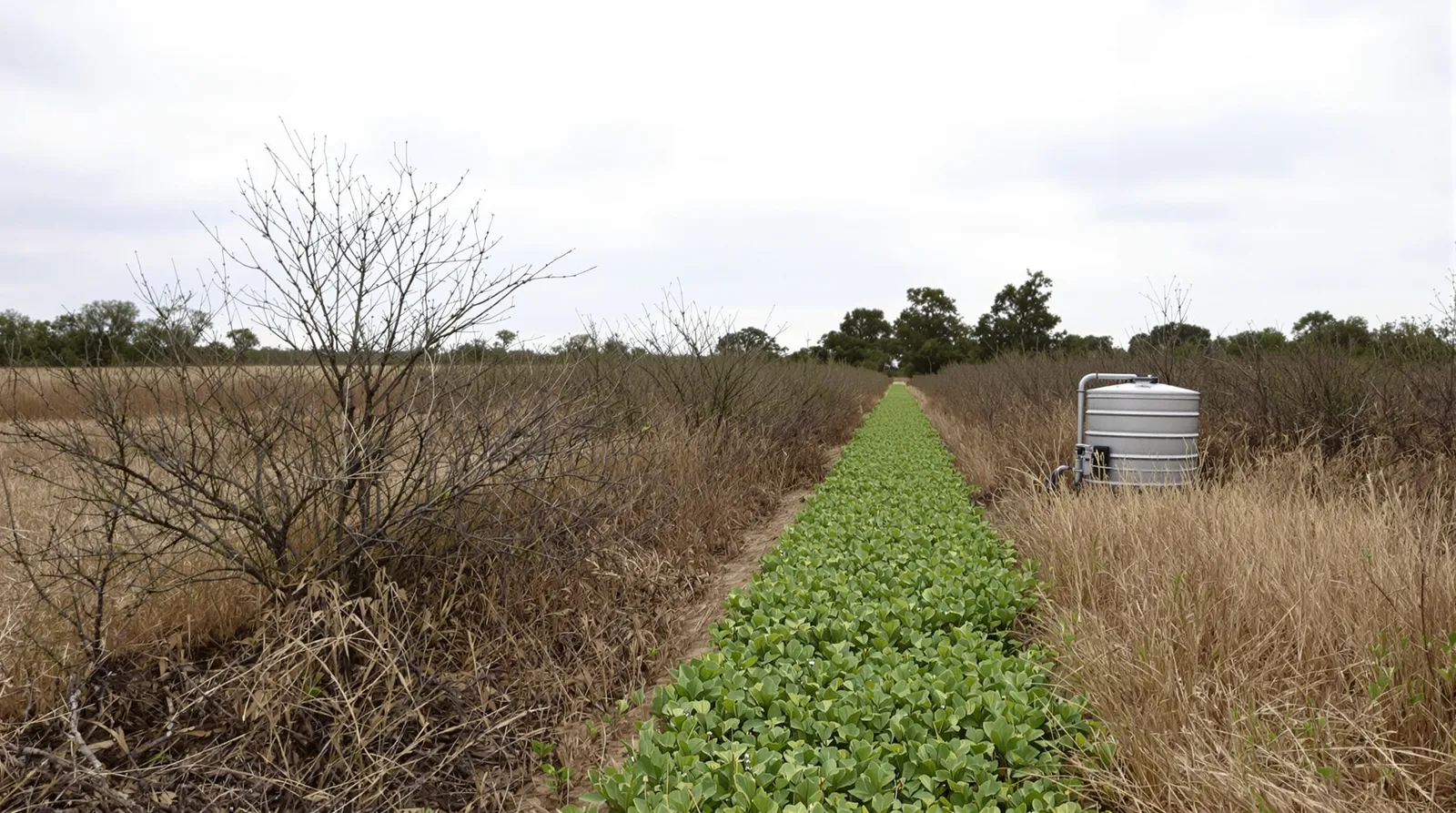
The degree of intensity that counts is set by ecoregion. Texas Parks and Wildlife publishes regional guidelines, including a combined guide for the Post Oak Savannah and Blackland Prairie and one for the Cross Timbers and Prairies, which cover white-tailed deer, bobwhite quail, Rio Grande turkey, dove, grassland songbirds, native prairie restoration and the rest. Those guidelines are where you find out what “adequate” supplemental water or an acceptable census actually looks like for North Texas ground. I am a REALTOR®, not a biologist, so this is the point where I bring in the wildlife biologist who writes the plan to those standards.
How many acres do you need for a wildlife exemption?
This is the question I get most, and the honest answer has a twist. There is no single statewide minimum acreage for wildlife management. But there is a very real minimum in the situation most North Texas buyers are actually in: buying a tract that was carved out of a larger property.
When a tract has been reduced in size since January 1 of the previous year, Texas rules require it to meet a wildlife-use requirement, a minimum percentage set by ecoregion under Texas Administrative Code Section 9.2005. The percentage translates directly into a minimum tract size. Here is how it lands for the ecoregions that cover North Texas:
| Ecoregion (North Texas) | Wildlife-use requirement | Approx. minimum tract | Lower tier (WM association) |
|---|---|---|---|
| Cross Timbers and Prairies | 93% to 95% | ~14 to 20 acres | 91% to 92% (~11 to 12.5 ac) |
| Blackland Prairie | 92% to 94% | ~12.5 to 17 acres | 90% to 91% (~10 to 11 ac) |
| Post Oak Savannah | 92% to 94% | ~12.5 to 17 acres | 90% to 91% (~10 to 11 ac) |
Wildlife-use percentages set by 34 Texas Administrative Code Section 9.2005 (Comptroller). Acreage is the approximate equivalent, since a required percentage of P works out to a minimum tract of about 1 divided by (1 minus P). The lower tier applies to tracts inside a qualified wildlife-management property association or certain endangered-species habitat. The county appraisal district sets the exact percentage within each range.
Two things fall out of that table. First, the practical floor for a stand-alone reduced tract in most of North Texas is somewhere in the low-to-high teens of acres, not the 40 or 80 acres people sometimes assume. Second, the number is set locally: the chief appraiser picks the exact percentage inside the state range, so the real minimum for your parcel comes from your county appraisal district, not from a blog. Grayson, Fannin, Collin and Denton each publish their own agricultural and wildlife guidelines, and Collin County’s, for one, defer to this ecoregion formula for reduced tracts.
If your tract was never reduced and still carries the ag valuation it already had, the reduced-acreage rule does not bite the same way, and the acreage question comes back to how the land first qualified for its ag valuation. Either way, confirm the current standard with the district before you build a plan around it.
Not sure which ecoregion your land sits in or how your county reads the acreage rule? Give me the tract and I will pull the district’s current guidelines before you count on qualifying.
Does switching to a wildlife exemption change my tax bill?
No, and that is the best-kept part of the whole thing. The land keeps the exact productivity valuation it already carried as agricultural land. Switching from cattle or hay to wildlife management does not raise or lower the taxable value on its own. You are not trading up to a better tax break, you are keeping the one you already have, without the livestock.
So the savings are not new savings. They are the ag-level tax you were already paying, preserved through a use you can actually keep up on a smaller or lightly-used tract. For a landowner staring at what full market-value taxes would do to a piece of land near the growth path, keeping that valuation intact is often worth more than any single thing they will do with the property.
Here is the gap in round, illustrative numbers, because the size of it is the whole point. Say a 20-acre tract near the growth path carries a market value around $15,000 an acre, or roughly $300,000. Taxed at market value at a combined rate near 2 percent, that is on the order of $6,000 a year. Under the open-space valuation, the same land is taxed on its agricultural productivity value instead, which on native North Texas pasture is a small fraction of market value, so the yearly bill can fall to a few hundred dollars. The wildlife-management route holds that same low productivity valuation without a single cow. Your county appraisal district sets the actual productivity value and tax rate, so treat these as illustrative figures rather than a quote. But a difference measured in thousands of dollars a year, every year you own the land, is why this valuation is worth understanding before you buy and worth protecting after.
Will a wildlife exemption trigger rollback taxes?
Keeping a qualifying wildlife-management use going does not trigger a rollback, because wildlife management is an authorized agricultural use. The rollback risk shows up only when the land leaves qualifying use altogether, most often when someone develops it or lets the use lapse.
When a rollback does hit, the county recaptures the difference between the productivity-value tax and the full market-value tax for the three years before the change of use. The lookback used to be five years, until House Bill 1743 cut it to three in 2019, and House Bill 3833 removed the interest entirely in 2021. So a rollback today is three years of recaptured tax and nothing on top. That is a smaller bill than the old rules, but on land near the metro edge it can still be a large number, because the gap between ag value and market value out here is wide and growing.
The takeaway is almost reassuring: the thing that protects you from a rollback is doing the wildlife work and keeping the records. An honest, documented plan is not just how you qualify, it is how you stay safe. Letting the plan slide is the risk, not the plan itself. I cover the rollback mechanics in more depth in my Grayson and Fannin ag-exemption guide, and I flag rollback exposure before you buy, not after a letter shows up.
The forms and the deadline
The paperwork is manageable if you hit the window. You file Comptroller form 50-129, the application for 1-d-1 open-space appraisal, and attach a wildlife-management plan on Texas Parks and Wildlife form PWD-885, with your county appraisal district. The plan is where the three-of-seven practices, your target species and your ecoregion standards all get written down.
The deadline is before May 1 of the year you want the valuation. A late filing is generally allowed up to the day before the appraisal review board approves the roll, but it comes with a 10 percent penalty, so it is worth hitting the spring window. And if your land already carries an ag valuation and you are switching the use to wildlife, remember that you also have to notify the chief appraiser of that change in use. In practice that means planning a cattle-to-wildlife conversion around the filing calendar, not deciding it in the fall.
Why more North Texas landowners are choosing wildlife over cattle
Here is the shift I am watching on the ground. North Texas land does not stay in big pieces near the growth path. Ranches that ran cattle for generations get sold and split, and the pieces that come out the other side are often 15, 20, 40 acres. That is a beautiful place to build or hold, but it is frequently too small to run cattle the way the original ranch did, which leaves new owners staring at a valuation they need to keep and a use they cannot realistically maintain.
Wildlife management is the bridge. It requires no livestock, no cross-fencing, no stocking rate. It asks for habitat work instead, which a smaller tract can carry, and it keeps the ag-level tax the land already had. For a lot of these owners it is the difference between holding the property and being taxed off it.
There is a cost angle worth naming, too. Running cattle means fencing, water systems, working pens, hauling and the animals themselves, real money before you count your time. The three wildlife practices a smaller tract usually leans on are the affordable end of the list: a supplemental water source like a guzzler or a managed pond, a food plot that is mostly the cost of seed and a few hours of planting, and an annual census you can largely do yourself. The habitat work is not free and it is not nothing, but for a 15-to-40-acre tract it typically costs far less to keep up than a herd would, which is a big part of why the wildlife route pencils out on land that cattle no longer do.
I will be straight about where I fit here. I come from a ranching family and I run cattle on my own land in North Texas, so I know the grazing side of this from the inside, the fences and the water and the work. That is also why I take the wildlife route seriously rather than treating it as a loophole. When a tract will not comfortably run cows anymore, managing it for the deer and quail and songbirds that belong on Blackland Prairie and Cross Timbers ground is not a trick, it is a real and often better use of the land. What I do not do is write the plan or interpret the tax code. I am a REALTOR®, not a biologist or a tax advisor. I flag the valuation early, confirm the current status with the appraisal district, and bring in the biologist who does write the plan.
One more tool worth knowing: Texas Parks and Wildlife’s Managed Lands Deer Program pairs naturally with a wildlife-management valuation, because the census, habitat and harvest work it involves can help document several of the seven practices at once. If deer are your target species, it is often part of the same plan.
How I help, and where to start
The pattern in all of this is simple. A wildlife-management valuation is one of the most valuable things a North Texas tract can carry, and it is easy to lose by accident or to assume onto land that never actually qualified. The two moments it is most at risk are when the land changes hands and when the use changes, and both are exactly where a REALTOR® who knows the local districts earns a place.
Before you buy, I verify the tract truly carries a current ag valuation, read which ecoregion and acreage rule apply, flag any rollback exposure, and line up the biologist so the plan is ready for the spring deadline. If you already own the land and want to know what it is worth before you decide anything, start with what your land is worth. If it is the market value on your tax bill that looks wrong rather than the valuation question, my property-tax protest guide covers that side. And when you are weighing the land itself, my North Texas ranch and land guide covers buying and selling acreage, with dedicated guides on hunting and recreational land, farm and cropland, and land across Grayson and Fannin counties.
When you want a straight read on the valuation and the land, tell me the tract or the area, call or text me at (903) 568-6626, or book a 30-minute consult. You will be deciding on facts, not on a listing’s word.
I am a REALTOR®, not a wildlife biologist, appraiser, surveyor, tax attorney or CPA. Nothing here is legal, tax or wildlife-management advice, an appraisal, or a guarantee that any tract will qualify for a wildlife-management valuation. Qualification, acreage rules, the wildlife-use requirement percentage, degree-of-intensity standards and deadlines are set by the Texas Tax Code, the Texas Comptroller, Texas Parks and Wildlife and your county appraisal district, and they change and vary by county and ecoregion. Statutory and rule references here include Tax Code Section 23.51 and 34 Texas Administrative Code Section 9.2005; confirm the current requirements with your county appraisal district, Texas Parks and Wildlife and a qualified tax professional before you act. Rules and figures noted here are general and current as of August 2026.