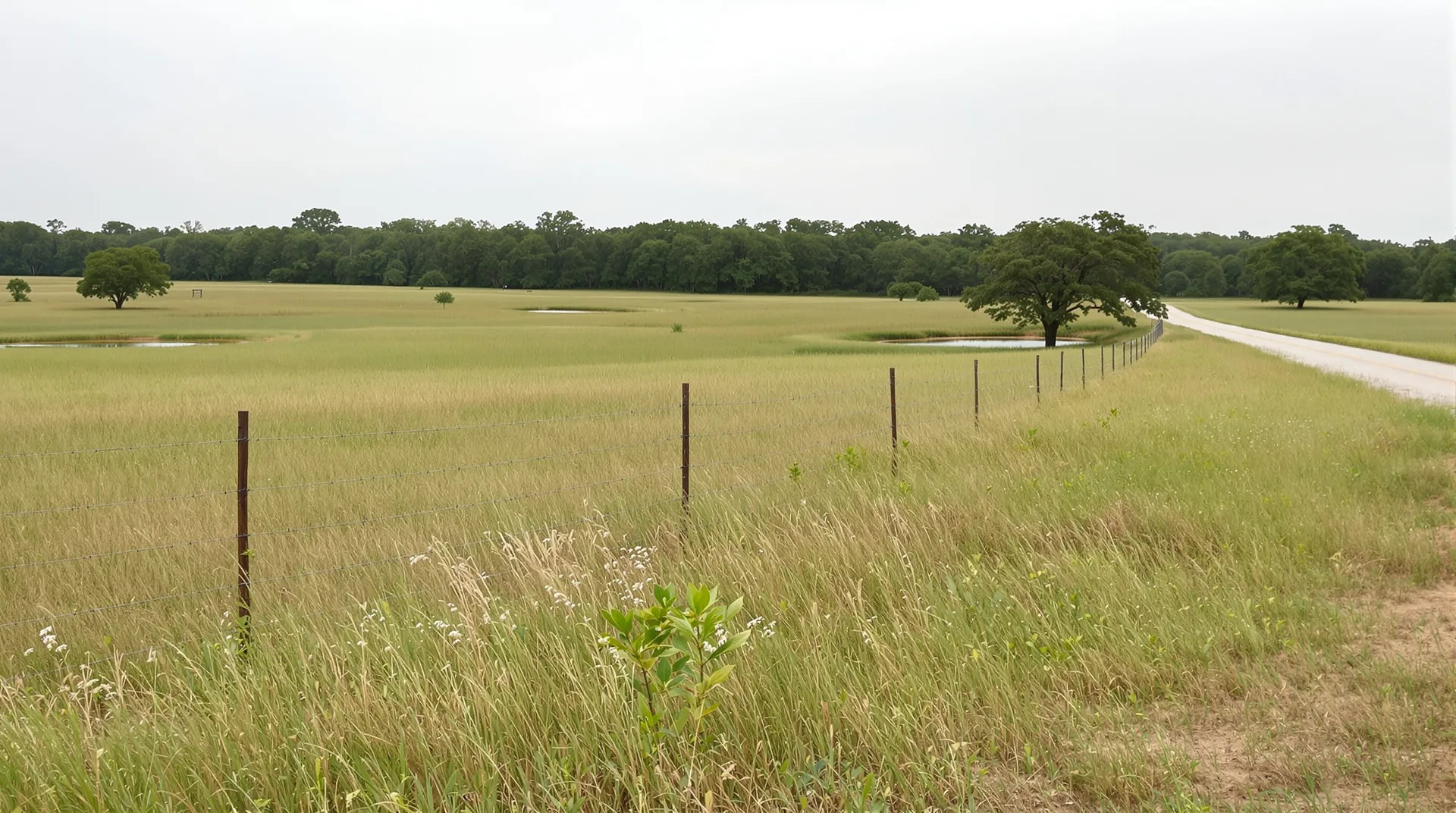
Here is the honest number, not a regional average that makes our land look cheaper than it is. The small acreage most buyers actually shop up here, vacant tracts of roughly 10 to 50 acres, sold for a median of about $24,000 an acre across North Texas in 2026, based on closed NTREIS sales. In the fast-growing core counties it runs higher still: roughly $30,000 an acre in Grayson, $34,000 in Denton, and $37,000 in Collin. True large working ranches further out sell for far less per acre, on the order of $9,000 an acre for big rural tracts across the wider region.
That three-to-four-fold gap between a small tract near town and a big ranch an hour out is not a contradiction. It is the single most important thing to understand about pricing land up here. So there is no one number, but there is an honest range, and I would rather hand you that than a tidy average that sets you up for sticker shock at the first listing.
Why per-acre price swings so wildly up here
Look again at that spread: about $24,000 an acre for small tracts, past $30,000 in the growth counties, and roughly $9,000 for large working ranches. Same region, three to four times the difference. That is not noise, it is the whole game, because North Texas is not one land market. It is a homesite market, a small-acreage market, a working-ranch market and a development-path market, all overlapping across the same counties, and a single “price per acre” only means something once you know which one a tract belongs to.
The biggest reason those numbers diverge is size, and it works the opposite way from what most people expect. Beyond that, “North Texas” itself stretches from the fast-growing collar just north of the metroplex out to genuinely rural country toward the Red River, and land an hour apart can be on completely different clocks. I am a REALTOR®, not a licensed appraiser, so treat these as the market map, then let me pull real comps before you rely on any single figure.
Want your number instead of a regional average? Tell me the acreage and where it sits and I will pull comps on land like yours, free and with no obligation.
The size rule: smaller tracts cost more per acre
This is the single most misunderstood thing about buying land, so it is worth saying plainly: the smaller the tract, the higher the price per acre, and the bigger the tract, the lower the price per acre.
A five-to-twenty-acre parcel near a growing town is competing for homesite and small-acreage buyers, a deep pool of people who want room to build. That demand pushes the per-acre price up. A three-hundred-acre ranch is competing for a much smaller set of ranch and investment buyers, and the total dollar figure gets so large that the price per acre has to come down for the whole deal to make sense. So a buyer who “only wants a few acres” is often shocked to find they are paying more per acre than the big ranch down the road, not less. If you are still weighing how big a place you actually need, my guide on how much land makes a ranch walks through the acreage the tax valuation and the cattle really require.
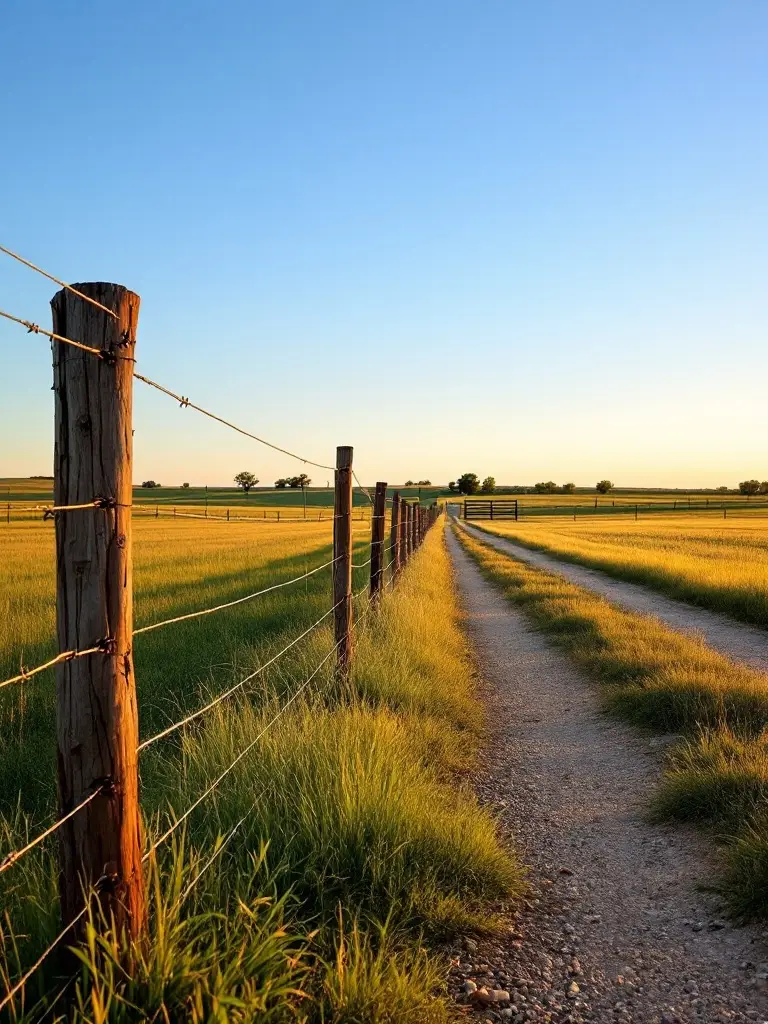
The North Texas numbers show it in black and white. Small 10-to-50-acre tracts run a median around $24,000 an acre, and well past $30,000 in the growth counties, while large working ranches, priced against a far smaller pool of buyers and carrying a huge total dollar figure, drop toward the $9,000-an-acre range of the broader rural market. The same county can hold both. Buy less land near a growing town and you often pay several times as much per acre as the big ranch an hour out.
Not sure which end of that spread your land falls on? Send me the tract size and the area and I will tell you which comps actually apply to it.
What actually moves the price per acre
Once you know the size bracket, these are the factors that decide where a specific tract lands, and they are the things I weigh when I pull comps for a buyer or seller:
- Location in the DFW growth path. The biggest macro driver up here. Land in the way of the metroplex growing north, toward Prosper, Celina, Van Alstyne, Anna, Sherman and Denison, carries a premium for its future, on top of its value as land today.
- Water. A stock pond, creek or river frontage, proximity to Lake Texoma or Bois d’Arc, a producing well, or a rural water line all move the price. Land with no water and no easy way to get it is worth less and harder to use.
- Road frontage and access. Paved road frontage with utilities at the road is worth far more than a landlocked tract that needs an easement. Legal, recorded access is not optional, it is value.
- Usable topography. Cleared, usable pasture beats the same acreage in flood plain, heavy woods or rock. Buyers pay for the acres they can actually use.
- Ag-valuation status. Whether the tract carries an open-space (agricultural) valuation changes the yearly tax bill, and therefore the cost to own it, which feeds straight back into what a buyer will pay.
- Improvements and rights. Cross-fencing, a barn, a home, and whether mineral and wind rights convey can each swing the number. What conveys is worth confirming in writing, not assuming.
Two tracts the same size, a mile apart, can be worth very different money once you run them through this list. That is why a rule of thumb off the internet is no substitute for reading the specific piece of ground.
Give me a specific parcel, or even just an address, and I will run it against every one of these factors and show you the comps behind the number. Start there.
Does an ag valuation change what the land is worth?
Yes, through the carrying cost. Land under an open-space agricultural valuation is taxed on what it produces rather than its full market value, so the annual property-tax bill drops sharply, and a lower cost to own makes the same tract more attractive and easier to sell.
The catch is that it is a special valuation you have to earn with qualifying use and can lose, not a permanent discount that rides with the deed. Buying land, or changing how it is used, can put the valuation and even trigger a rollback bill if you are not careful. I walk through exactly how the acreage rules, qualifying use and rollback taxes work in my Grayson & Fannin ag-exemption guide, and I verify the current ag status of any tract with the appraisal district before you write an offer, because it affects both the price and what you will owe the first year.
Are North Texas land prices going up or down?
The current read: after a red-hot run, North Texas small-acreage prices have cooled, and in the closest-in counties they have corrected hard. Across 2026 the region’s 10-to-50-acre median is down about 7.5 percent from the same stretch of 2025, and the metro-edge counties led the drop, with Denton off roughly 38 percent and Collin about 24 percent from their 2025 highs, while Grayson has held roughly flat. Sales volume thinned too. This is a real repricing off the peak, not a crash, and the steadier counties further from the metro core have given back the least.
That matters because rural land does not trade like stocks, or even like houses. It tends to be slower and stickier, with fewer sales to read, and up here it carries the extra pressure of the metroplex expanding north year after year. That combination makes broad “prices are up” or “prices are down” headlines close to useless for an actual buying or selling decision.
What I do instead is look at what is genuinely closing near a specific tract, and check the current regional trend from the Texas A&M Real Estate Research Center, then give you a straight read for the exact area you are weighing. If you are also trying to time a home sale around it, my guide on whether to sell now or wait walks through the same honest, no-fear approach. Timing an entire market is guesswork. Reading one neighborhood is not.
How to get the real number for a specific tract
Here is the honest bottom line. A per-acre price for North Texas ranch land is not a number you look up, it is a number you build, from real comparable sales weighted for size, water, access, ag status and exactly where the land sits. Everything above tells you which direction each factor pushes the price. Only comps on the actual parcel tell you where it lands.
That is exactly what I do, at no cost and with no obligation to list. Tell me the tract you are weighing or the area you are shopping and I will pull the honest numbers, or if you already own land and want to know where you stand, start with what your land or ranch is worth. Either way, you will be negotiating on facts instead of a rule of thumb. When you are ready to go deeper on buying or selling land up here, my North Texas ranch & land guide covers the rest, with dedicated guides if you are weighing farm and cropland for the soil and the income, or hunting and recreational land for the game and the wildlife-tax valuation. My property-tax guide covers keeping the tax bill in check after you close. When you want the real number, tell me the tract or the area, call or text me at (903) 568-6626, or book a 30-minute consult.
I am a REALTOR®, not a licensed appraiser, tax attorney or CPA. Land values and per-acre prices vary widely, change over time, and depend on the specific tract; nothing here is an appraisal or a guarantee of value. Per-acre figures cited here come from closed NTREIS (North Texas Real Estate Information System) sales of 10-to-50-acre tracts through mid-2026, with large-tract and statewide context from the Texas A&M Real Estate Research Center; land prices change constantly and vary widely by tract, county and size. Confirm current figures with fresh comparable sales and the county appraisal district, and confirm ag-valuation and tax questions with the appraisal district and a qualified tax professional before you act. Market notes here are general and current as of August 2026.